

Scalp psoriasis: causes, treatments, and hair care routines
Do you have red patches, itching, scabs, and dandruff appearing on your scalp? You may be suffering from psoriasis.
In this article, we give you all the key information you need to understand its causes and effectively relieve its symptoms. Here’s what we’ll cover:

Defining and recognizing psoriasis

Its impact on a hair transplant procedure

Treatments and best practices
Understanding Scalp Psoriasis
Whether you are a woman or a man, older or younger, you can be affected by psoriasis.
It is a chronic, non-contagious inflammatory disease that occurs when the skin renewal process in the epidermis accelerates.
The cells do not have enough time to be shed and therefore accumulate on the surface of the skin. Discomfort then sets in, and applying treatments can become more difficult.
What Does Scalp Psoriasis Look Like?
Well-defined red patches, scales (also known as white flakes), itching, a burning sensation…
Psoriasis can manifest in different ways and can range from mild to severe, affecting the neck, the area around the ears, and the scalp, extending as far as the beginning of the forehead.
Scalp Psoriasis or Dandruff: How Can You Tell the Difference?
Because the scalp is sensitive to hormonal changes, it can be prone to various forms of irritation. So, how can you tell the difference between them
- Seborrheic dermatitis is linked to inflammation caused by a fungus that naturally occurs on our skin, resulting in greasy, pinkish scales, often accompanied by itching.
- Psoriasis appears as thick, well-defined, dry red patches, along with white flakes.
If you have any doubts, consult a dermatologist who can provide you with the answers you need.
What Are the Causes and Triggers?
There can be many causes behind the development of psoriasis.
They are generally linked to an immune system dysfunction triggered or aggravated by various factors:
- Stress and fatigue
- Genetics: if one of your parents is affected
- Climate: winter temperatures can promote flare-ups
- Lifestyle: tobacco and alcohol consumption, etc.
- Certain medications containing lithium and beta-blockers
Are Psoriasis and Hair Loss Linked?
Because it affects the scalp, psoriasis can indirectly cause hair loss.
This is mainly due to scratching and inflammation, which can disrupt and weaken the hair follicles and therefore lead to hair loss. While this situation can be concerning, it is usually reversible and temporary.
Are Psoriasis and Hair Transplants Compatible?
Having psoriasis does not necessarily prevent you from undergoing a hair transplant.
If the doctor determines that the psoriasis is too severe, they may ask you to treat it for at least 2 weeks before the scheduled procedure.
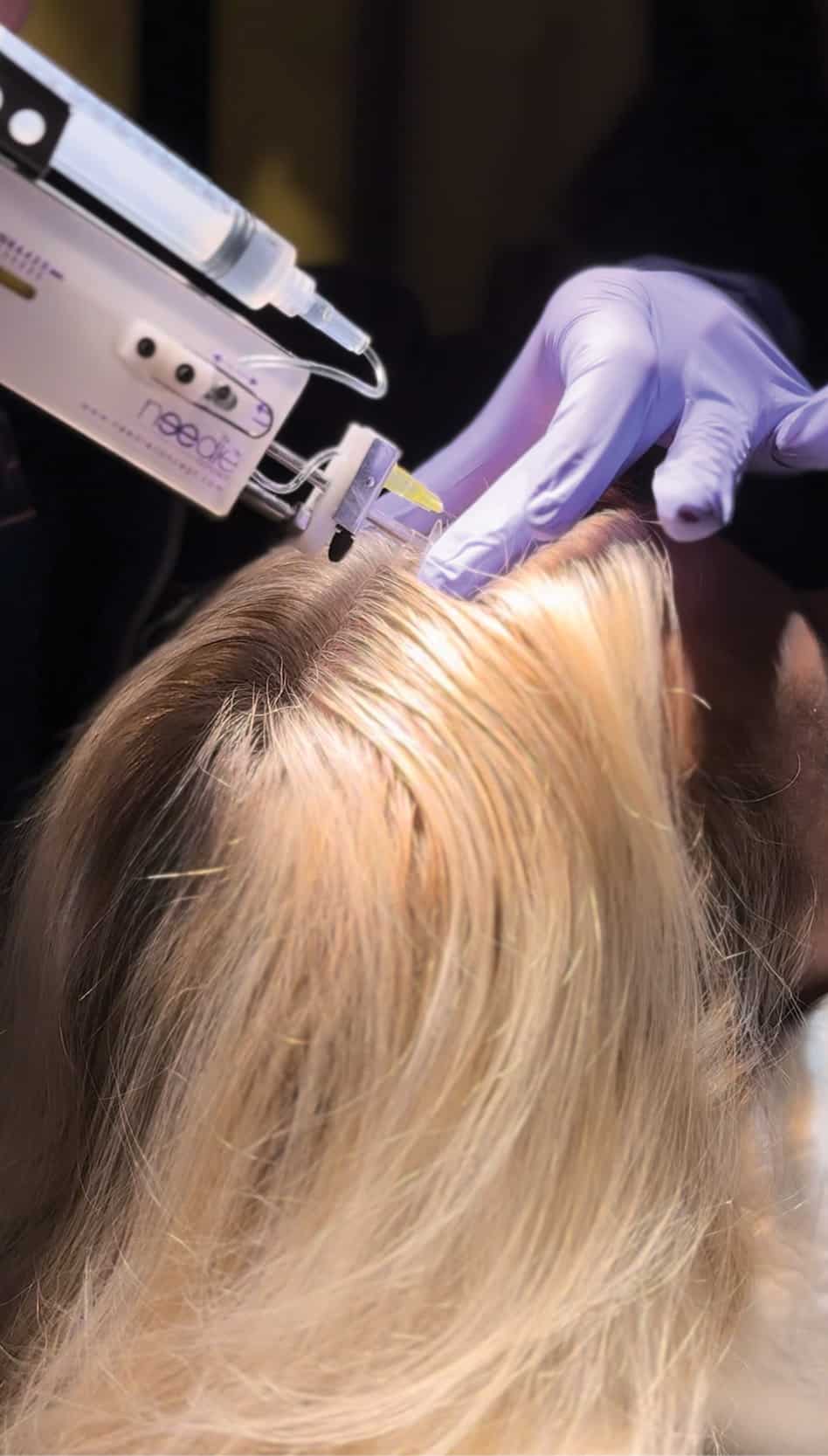
To improve hair quality and support healing, phototherapy (particularly UVB therapy) may help reduce inflammation and improve the appearance of lesions by slowing down the growth of skin cells.
Certain treatments can help cleanse the scalp and keep inflammation under control.
How Is the Diagnosis Made by a Healthcare Professional?
- The diagnosis is made during an appointment with your dermatologist.
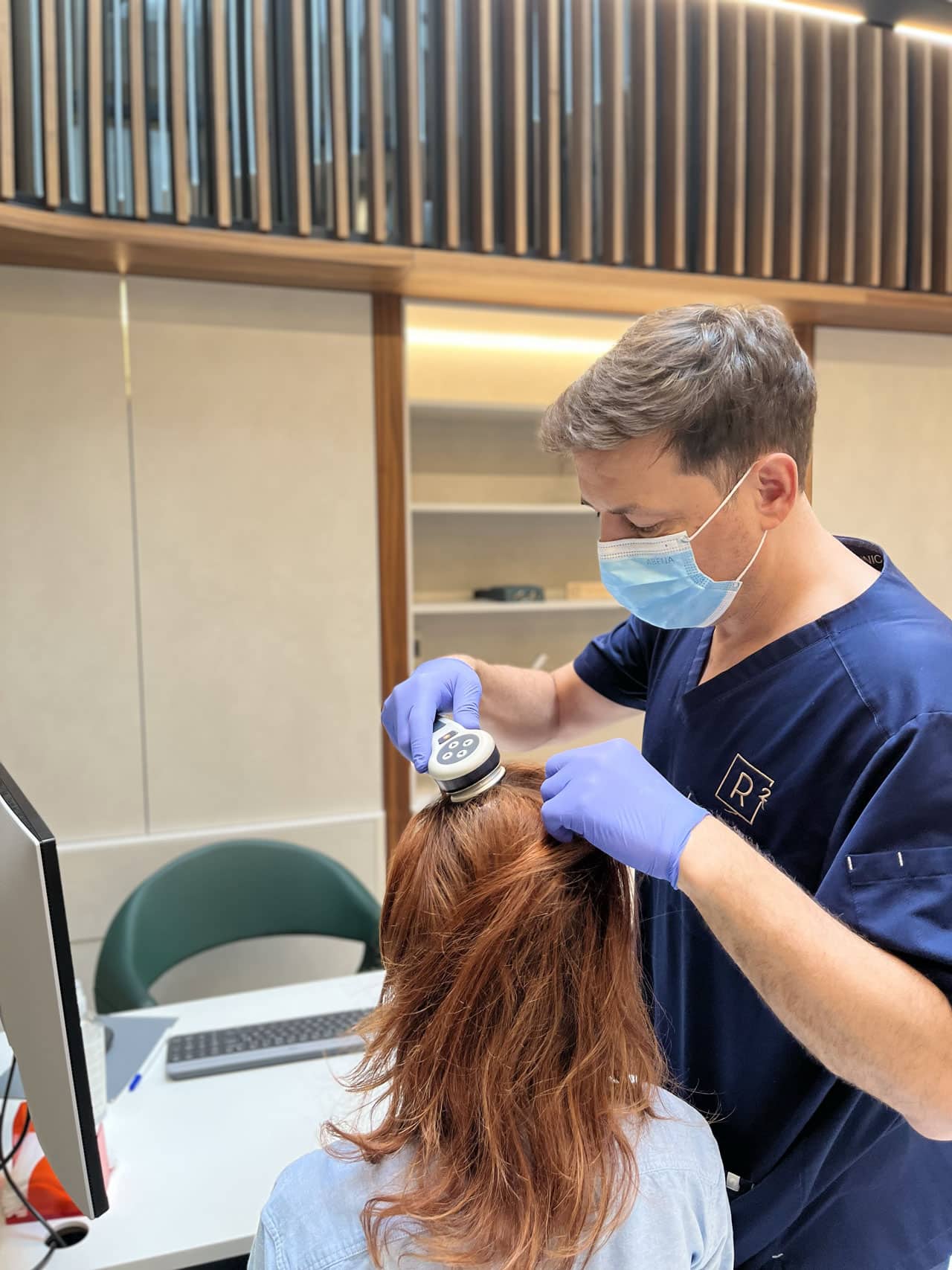
- They will first examine the affected areas and then assess the appearance and location of the plaques.
- In some cases, the doctor may use a dermatoscope to examine the blood vessels.
Psoriasis Treatments for the Scalp: What Works Depending on Severity
To treat psoriasis as effectively as possible, your doctor or dermatologist may recommend certain treatments depending on the severity of the condition.
Mild to Moderate Forms
Topical treatments (applied directly to the affected areas), such as topical corticosteroids and vitamin D3, can help moisturize the skin and soothe irritation.
More Extensive Forms
Phototherapy under dermatological supervision.
Severe Forms
Systemic treatments, including certain immunosuppressants or biologic therapies, may be prescribed to regulate skin cell turnover.
How Should You Wash Your Hair When You Have Psoriasis?
To help soothe psoriasis, it is important to follow a specific routine:
- First of all, when washing your hair, use lukewarm water rather than hot water, which can worsen irritation and itching.
- Gentle, non-aggressive massaging while washing is beneficial, as it promotes blood circulation.
Which Shampoo Should You Choose for Scalp Psoriasis and How Should You Use It?
To choose the right shampoo, it is important to understand its properties and identify the most effective option for your hair type. The goal is to moisturize your scalp without irritating it.
Ingredients
When it comes to ingredients, opt for a shampoo containing keratolytic agents such as salicylic acid (which helps loosen plaques and reduce scaling), as well as moisturizing ingredients such as urea or ichthyol, which can help soothe itching.
Frequency and Method
It is recommended to shampoo 2 to 3 times a week and leave the product on for several minutes to allow it to work effectively. If you have any questions, do not hesitate to seek medical advice to make sure you are using a product that is suitable for you and does not cause any discomfort.
What Should You Avoid to Prevent the Condition from Getting Worse?
Avoid Aggressive Contact
To reduce the risk of aggravating psoriasis, it is important not to scratch or rub your scalp, even if you feel the urge to do so. Be gentle when drying your hair and avoid wearing hats or helmets that are too tight.
You should also avoid exposing your scalp to hot environments (sun exposure, hair dryers, hot water, saunas, steam rooms, etc.), as it is already sensitive and weakened.
Seawater and swimming pools can also irritate the skin. Therefore, swimming should be kept brief, followed immediately by rinsing with fresh water and applying a suitable moisturizing cream.
Choose Your Hair Care Products Carefully
Of course, any chemical cleansing or styling product (gel, wax, spray, powder, etc.) can be a source of irritation. We recommend avoiding them to prevent your psoriasis from getting worse.
Check their ingredients and perform a patch test before incorporating them into your routine. Generally speaking, always opt for the gentlest and most natural products possible (pH-neutral and dermatologist-approved) for your scalp.
And as always, if in doubt, seek advice from your doctor.
How Can You Live Better with Scalp Psoriasis on a Daily Basis?
To make everyday life easier, it is important to adopt a good routine:
- Reduce sources of stress as much as possible,
- Get a good night’s sleep,
- Avoid alcohol and tobacco,
- Follow your treatment and care routine carefully.
For some people, psoriasis can lead to mental fatigue, social anxiety, or even a loss of self-confidence. If you are experiencing significant emotional distress, do not hesitate to seek psychological support. It can help you learn how to manage the situation as effectively as possible.
Frequently Asked Questions

Choose gentle, non-aggressive products and use delicate movements!
It is important to adopt a care routine tailored to your needs (moisturizing the epidermis, soothing itching, reducing plaques, etc.) and use gentle movements to avoid irritating your scalp.
Checking the ingredients is the key step when choosing your shampoo
Avoid overly harsh ingredients that may cause irritation and opt for formulas suitable for managing psoriasis, containing keratolytic agents, urea, ichthyol, or salicylic acid.
The appearance of the scalp, whether oily or dry, can provide several clues
Psoriasis generally causes whitish or silvery scales and very dry, well-defined plaques in a specific area. Seborrheic dermatitis causes redness and greasy dandruff over a more diffuse area.
Medical treatments, cosmetic care, and other solutions can help provide long-term relief
At present, there is no complete cure for psoriasis, but medical advances make it possible to significantly reduce its symptoms.
Any other questions?
Our advisors are entirely at your disposal to provide information, prepare estimates, and arrange your hair assessment.