Formule 1
Greffe de Cheveux FUE
Technique Saphir
500 à 1 000 greffons
Intervention sur une journée
2 000 €
Technique CHOÏ
2 750 €

Curly / Afro Hair
Hair Transplant
Curly and afro-textured hair have a unique structure that requires specialized expertise. They are also more prone to certain forms of alopecia, particularly traction alopecia and cicatricial alopecia.
Hair transplantation, especially the FUE technique, offers an effective solution for restoring natural density and coverage. But what are the specific challenges associated with curly and afro hair transplantation, and which techniques are best suited to this hair type?

Textured hair specialist
Afro, kinky, curly hair
100% dedicated to hair
Maximum quality, minimum price
+20,000 patients supported
Leader in France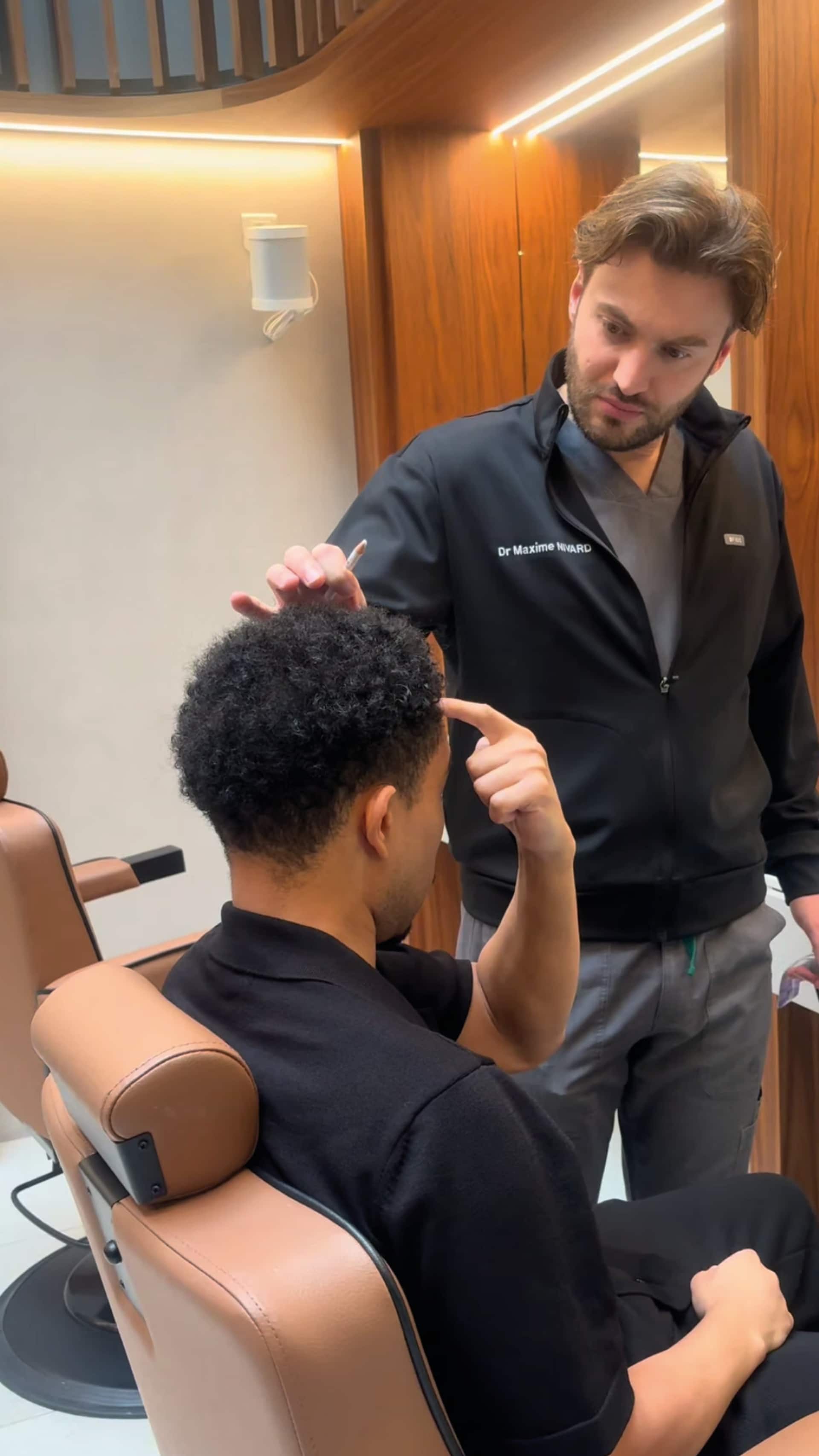
Can hair transplants be performed on curly hair?
Yes, hair transplantation is absolutely possible for curly and afro-textured hair. However, their unique characteristics require a particularly skilled approach. The curved shape of the follicle increases the risk of transection during extraction, which can affect graft survival.
In addition, hair density must be carefully evaluated to optimize graft harvesting without compromising the donor area. This is why working with a specialist experienced in afro and curly hair transplantation, such as Racine², is essential.
With an adapted technique and rigorous follow-up, patients can achieve natural-looking, harmonious, and long-lasting results.
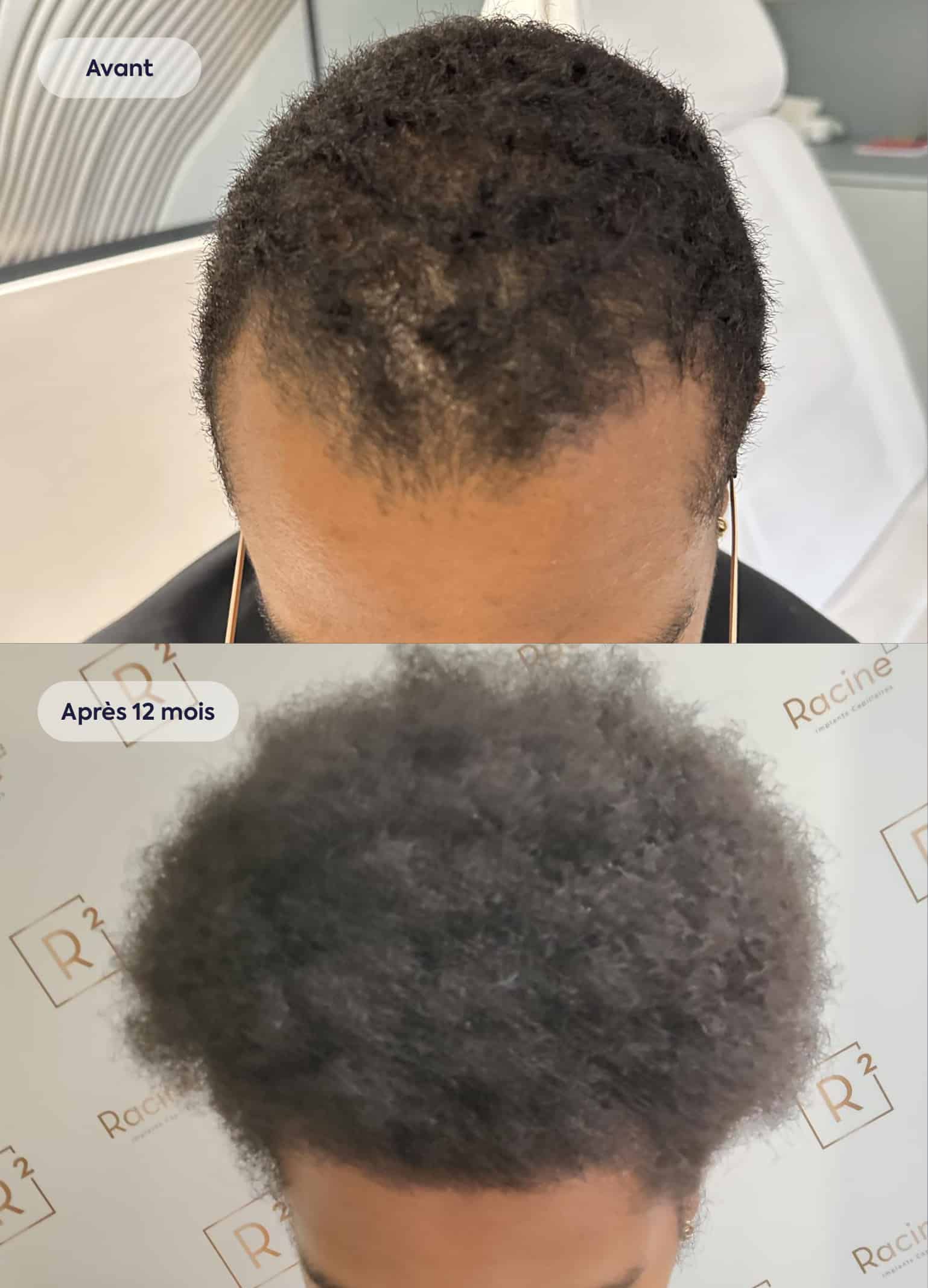
Curly and afro hair possess a unique spiral-shaped structure that creates volume and the appearance of density. However, contrary to popular belief, hair density is approximately 20% lower than that of other hair types.
This characteristic, combined with the natural fragility of the hair shaft and certain hairstyles involving prolonged tension, makes this hair type more susceptible to hair loss conditions such as traction alopecia.
Additionally, the curved shape of the follicle makes follicular extraction more complex, requiring specialized transplantation techniques to minimize transection and maximize graft survival.
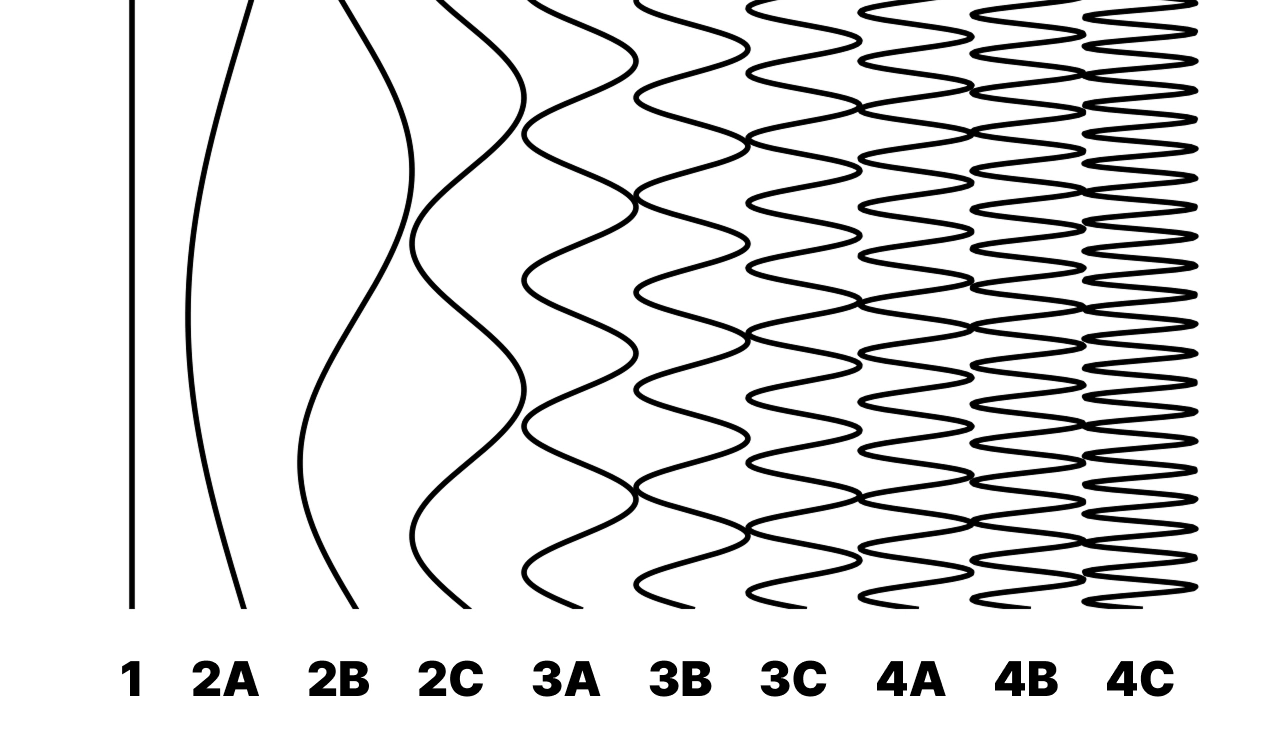
Not all afro-textured hair is the same.
On distingue plusieurs types, classés selon leur structure et leur niveau de frisure :
Ces différences influencent directement la manière dont les follicules sont extraits et implantés lors d’une greffe de cheveux.
Une bonne évaluation du type de cheveux est essentielle pour choisir la meilleure technique d’implantation et obtenir un résultat naturel.
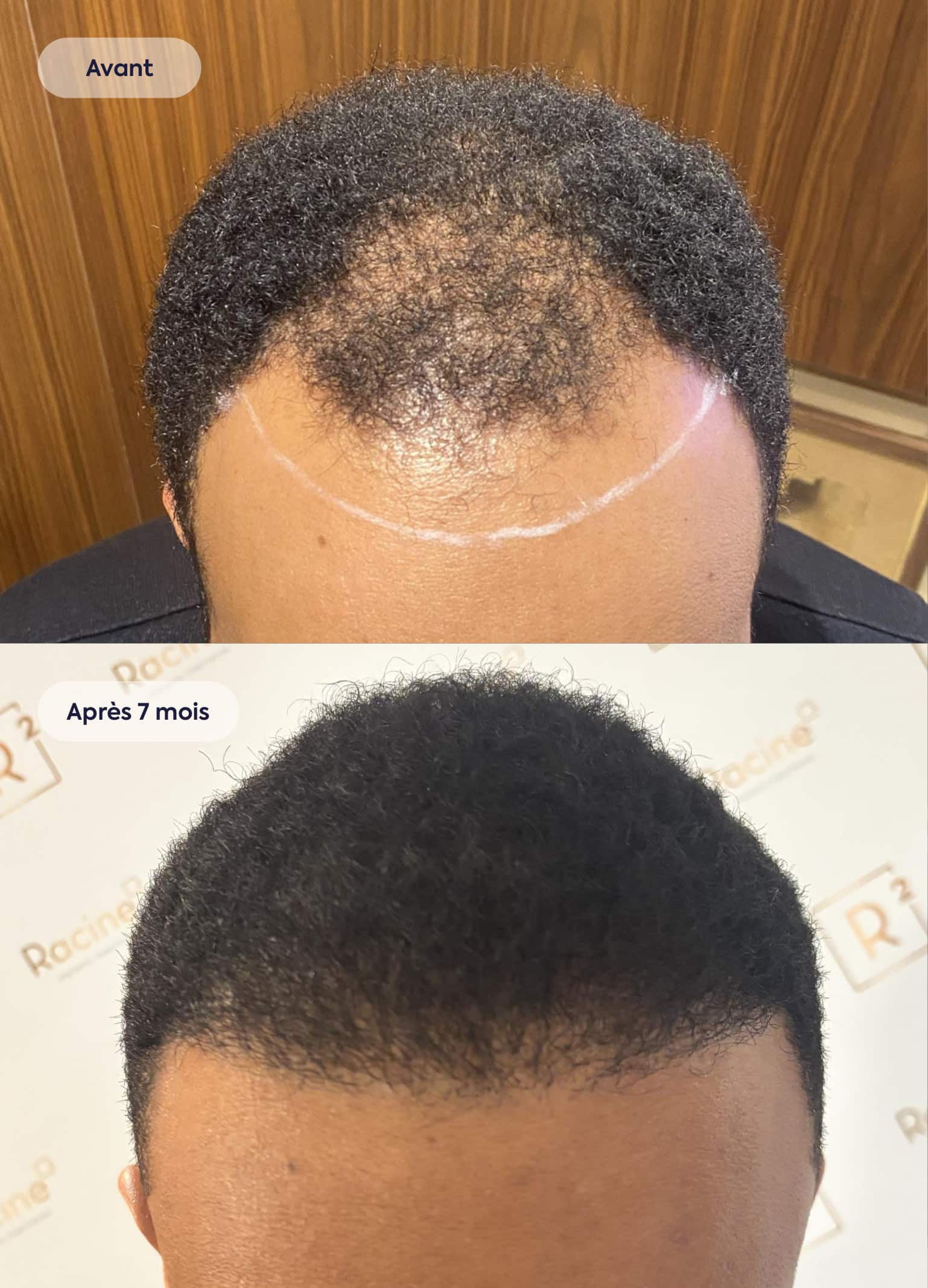
Hair transplantation for afro-textured hair requires specialized expertise due to the natural curvature of the follicle and the specific structure of the scalp. Unlike straight hair, follicles in patients of African descent often have a spiral-shaped growth pattern, making extraction more technically demanding.
Among available transplantation methods, FUE (Follicular Unit Extraction) is particularly well suited because it allows individual graft harvesting while minimizing the risk of follicular transection.
During the procedure, the practitioner uses specialized punches designed to respect the natural angle of the follicle and preserve as many viable follicular units as possible. This technique is ideal for reconstructing a natural and harmonious hairline while avoiding the visible scarring associated with more invasive procedures.
The same precision is applied in eyebrow transplantation, where exact graft placement is essential.

The procedure is performed under local anesthesia to maximize patient comfort.

Implantation is tailored to the specific structure of afro-textured hair, ensuring natural texture, density, and harmonious results.

Additional complementary treatments may be recommended to support graft survival and encourage healthy hair regrowth.

Diligent post-operative follow-up is essential. Monitoring recovery, ensuring adherence to aftercare instructions, and tracking hair growth all contribute to achieving optimal long-term outcomes.
The cost of a hair transplant depends on several factors, including the transplantation method, the number of grafts required, and any complementary treatments included.
At Racine Carrée, each procedure is performed using advanced technology to ensure optimal results, with comprehensive post-operative follow-up included. Our doctors are specifically trained to treat patients with curly and afro-textured hair, adapting extraction techniques to preserve follicular integrity.
Thanks to this expertise, our clinic consistently delivers natural and lasting results while maximizing patient comfort throughout the process.
For more information about our transparent and competitive pricing, discover our detailed pricing guide designed to provide exceptional care at a fair cost.
Formule 1
Greffe de Cheveux FUE
Technique Saphir
500 à 1 000 greffons
Intervention sur une journée
2 000 €
Technique CHOÏ
2 750 €
Formule 2
Greffe de Cheveux FUE
Technique Saphir
1 100 à 1 900 greffons
Intervention sur une journée
2 750 €
Technique CHOÏ
3 500€
Formule 3
Greffe de Cheveux FUE
Technique Saphir
2 000 à 3 000 greffons
Intervention sur une journée
3 500 €
Technique CHOÏ
4 250€
Formule 4
Greffe de Cheveux FUE
Technique Saphir
3 100 greffons et plus
Intervention sur une journée
4 250 €
Curly hair is particularly susceptible to certain forms of alopecia.

Traction alopecia is common among both men and women due to tight hairstyles, braids, extensions, and prolonged tension on the hair follicles.
Androgenetic alopecia also affects patients with afro-textured hair, although it may present differently depending on genetics and lifestyle factors.
Cicatricial alopecia may result from scalp conditions such as folliculitis decalvans or lupus, which cause irreversible destruction of the hair follicles.

The initial consultation is designed to establish an accurate hair-loss diagnosis. This evaluation is essential in determining whether a transplant is appropriate or if an alternative treatment would be more suitable.
Our other hair transplants

Not always. FUE hair transplantation can be performed with either complete shaving or partial shaving, depending on the patient's needs.
FUE (Follicular Unit Extraction) may be carried out using a fully shaved donor area or a partial-shave approach. For many patients with afro-textured hair, the no-shave or partial-shave technique is often preferred to preserve their appearance immediately after the procedure.
The doctor adapts the technique according to each patient’s individual characteristics to ensure the best possible results without compromising immediate aesthetics.
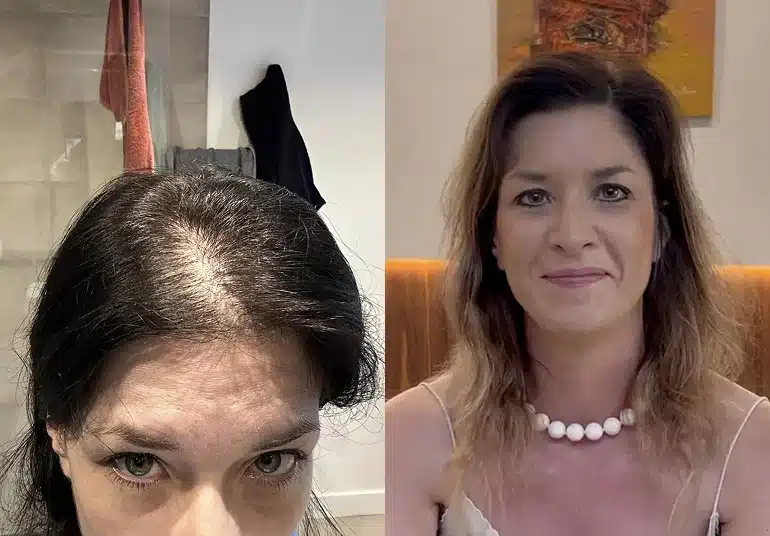
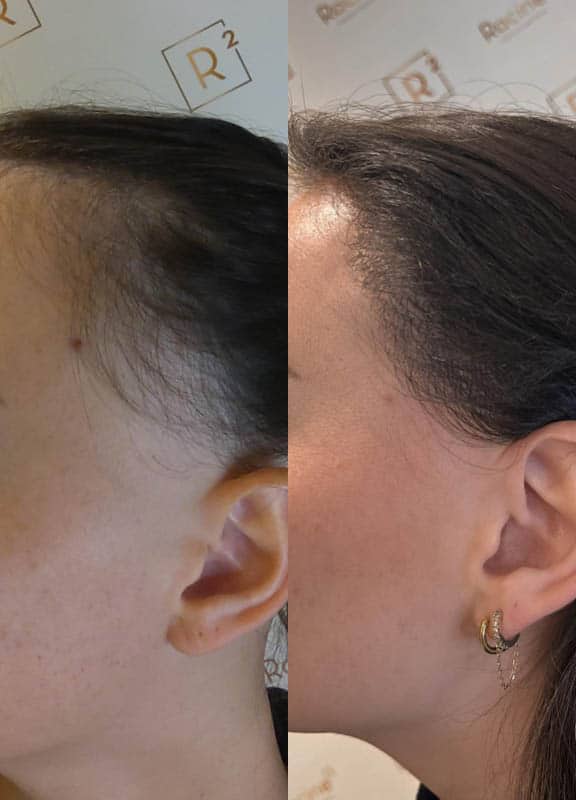
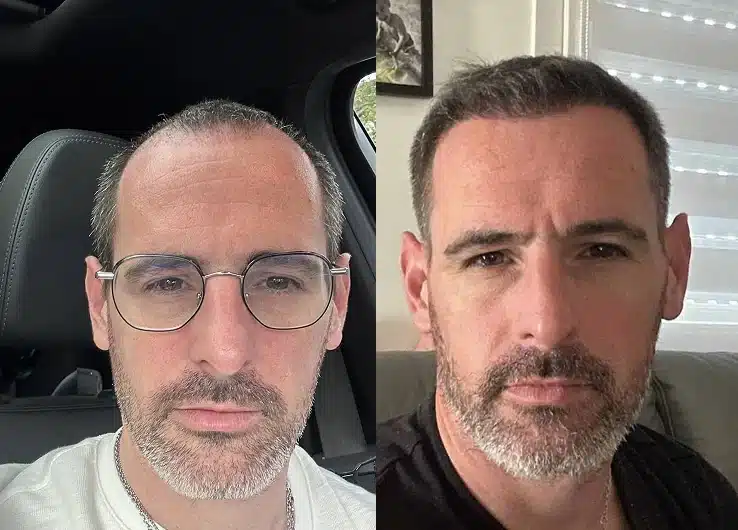
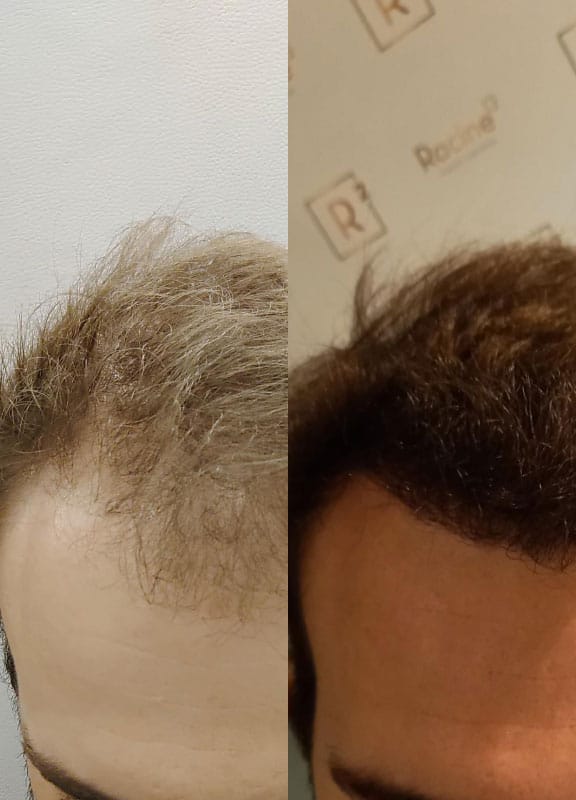
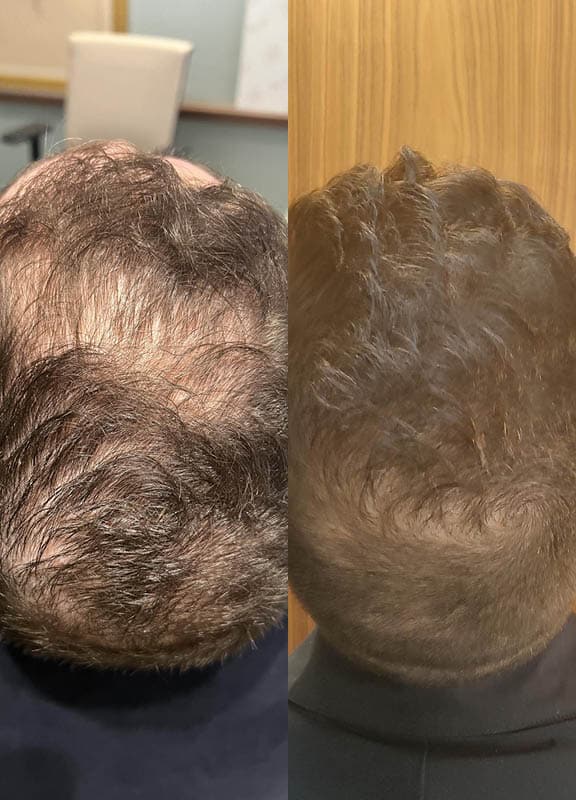
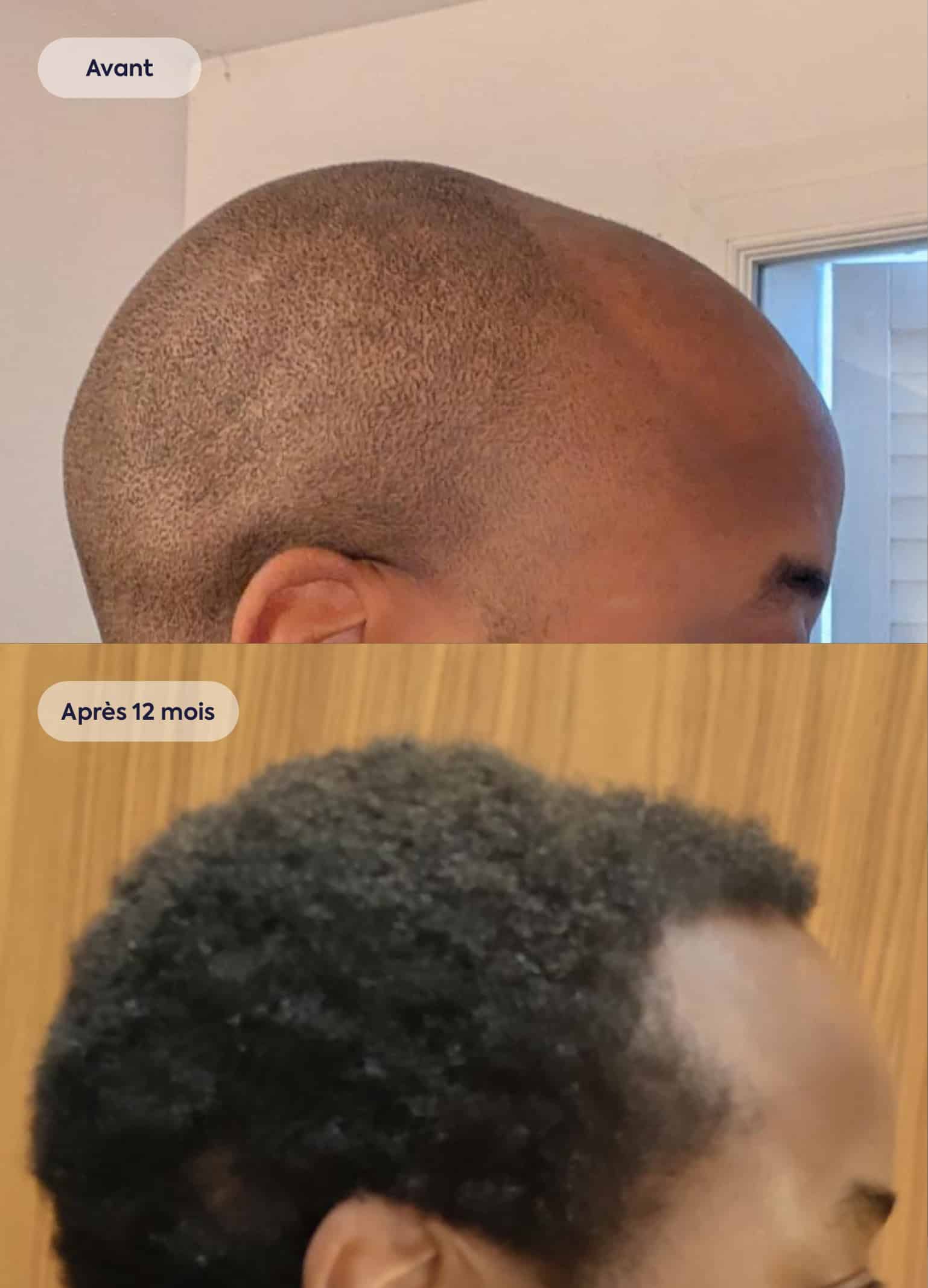
A hair transplant on afro-textured hair can produce highly natural results when performed by an experienced doctor.
Because of the curved structure of the follicles, afro hair transplantation requires a specialized approach. Proper implantation allows for natural-looking density and harmonious coverage, particularly along the hairline and recipient areas.
What Should You Expect After a Hair Transplant?
Initial Phase
Some shedding of the transplanted hairs may occur in the weeks following the procedure. This is known as the telogen shedding phase and is completely normal.
Progressive Regrowth
New hair growth generally begins between three and four months after the procedure.
Final Results
Optimal density is typically achieved around twelve months following transplantation.
With or Without Shaving?
Patients may choose between shaved and unshaved FUE procedures depending on their personal preferences and aesthetic goals.
A successful hair transplant depends on the doctor’s expertise and ability to adapt the procedure to the specific characteristics of the scalp and hair type. At Racine² Paris, we master the full range of transplantation techniques to provide results tailored to every patient.
No, but it can restore density in areas where hair no longer grows.
Hair transplantation is an effective solution for restoring a fuller head of hair, but it does not prevent future hair loss in untreated areas. For this reason, complementary medical treatments are often recommended to help preserve existing hair.
Why Is FUE Recommended?
Hair Characteristics Influence the Outcome
Hair characteristics—whether curly, fine, or straight—play a significant role in the perception of density after transplantation. For optimal results, the technique must be customized to each hair type and supported by careful post-operative follow-up to maximize long-term success.
Questions / Estimates