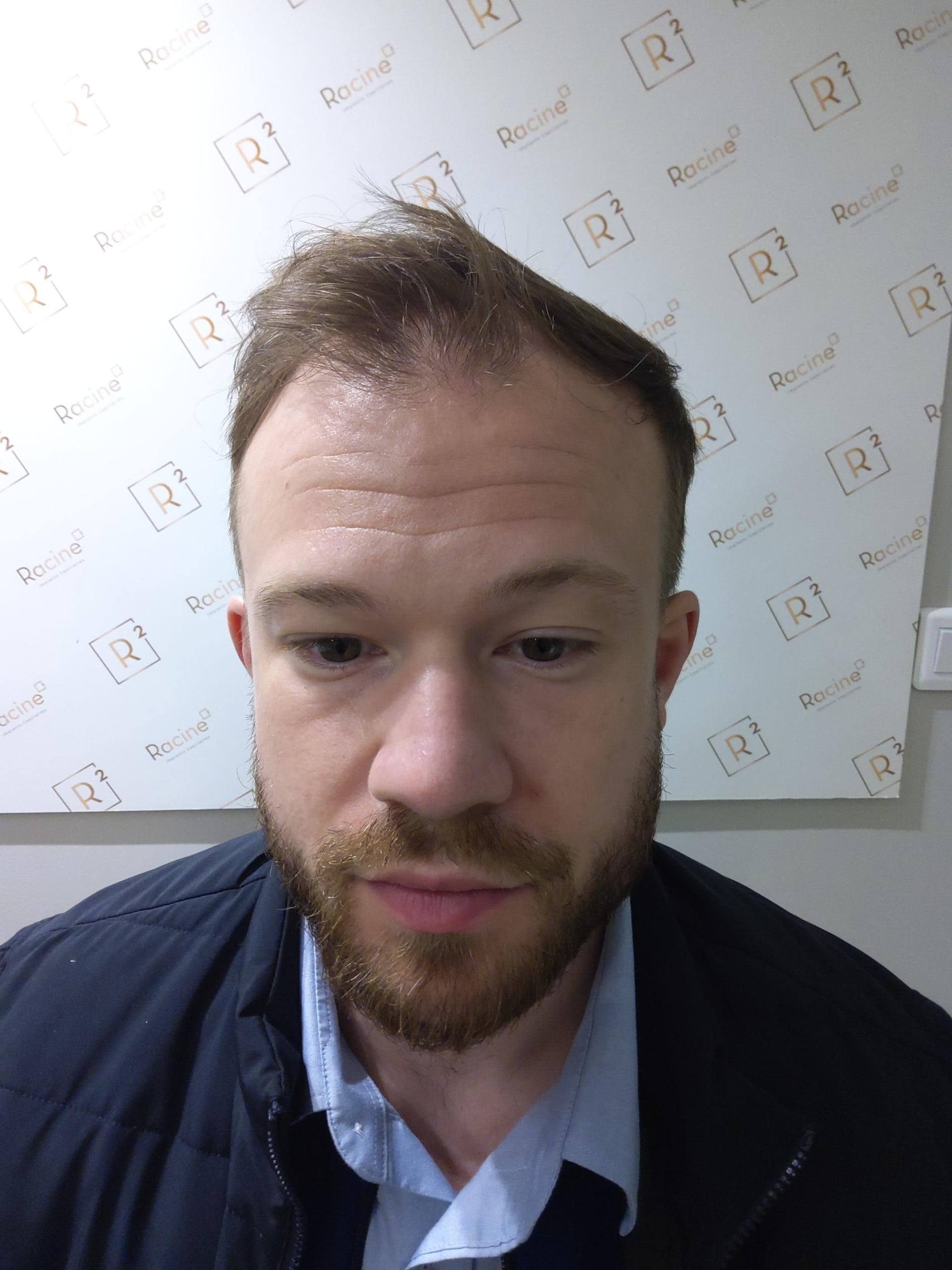
Valentino
Formule 4 — 4000 greffons — 4250€
Expert en coaching sport santé, notre patient a bénéficié d'un parcours sur mesure adapté à sa pratique

Having a hair transplant in summer
The FUE protocol developed by Racine Carrée, using Saphir blade or Choi implanter implantation, allows you to undergo a high-quality hair transplant even in summer, with a few simple precautions to follow.

Sun
Wearing a hat is possible after 11 days

Recovery
Quick, peaceful, and completely discreet

Sweating
Heat-related sweating does not cause any problems

Deeply human
Listening · Compassion · Gentle care
100% dedicated hair clinic
Maximum quality · Minimum prices
+2 000 hair transplants
performed in summer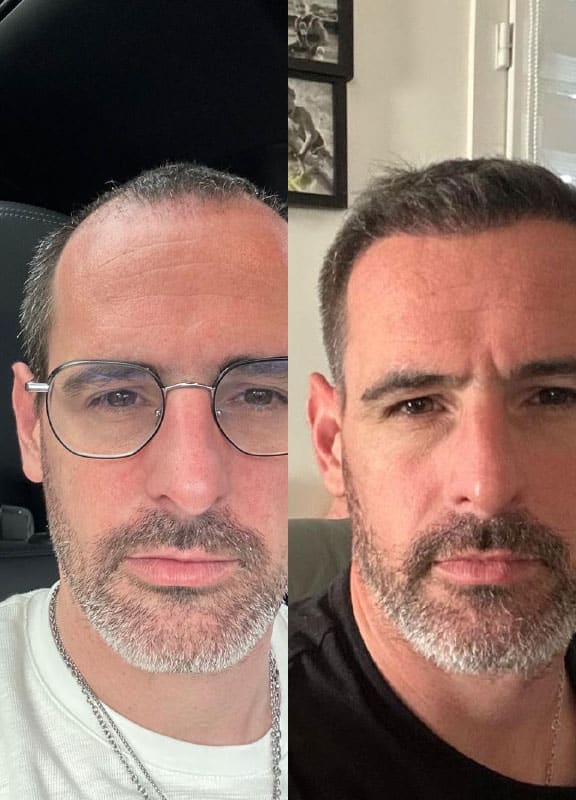
At Racine², we believe there is no universally “right” or “wrong” season, only the right time for you. And our role is to help you prepare for it under the best possible conditions.

Fewer social interactions, more flexibility in your schedule, and above all, a real break from everyday life and certain stressful events.
This peace of mind helps you recover better.

In summer and during the holidays, it’s easier to wear a hat or cap without drawing attention, while also protecting yourself from the sun...
Yes, you can enjoy your holiday.

The abundance of fresh fruit and vegetables allows your body to stock up on vitamins and trace elements, while increased daylight helps promote a healthy sleep pattern.
You’re giving your body the best possible conditions to heal properly and prepare for hair regrowth.

For most patients, it is possible to wear a hat from day 11, and the redness completely disappears within 4 to 6 weeks.
The signs of the transplant will therefore be gone or significantly reduced by the time you return to work.

Are you working this summer?
No problem!
A hair transplant does not prevent you from returning to work immediately, unless your job requires you to wear headgear or involves strenuous physical activity.

Whatever the season, our teams are here to advise, inform, and reassure you.
In addition to a digital space filled with tutorials, our advisors are readily available through a direct phone line and a dedicated WhatsApp channel.
Hair transplant or treatment? Wait or take action immediately? At Racine Carrée, we guide our patients towards the most effective course of action and support them throughout their journey, respecting both their wishes and their bodies.
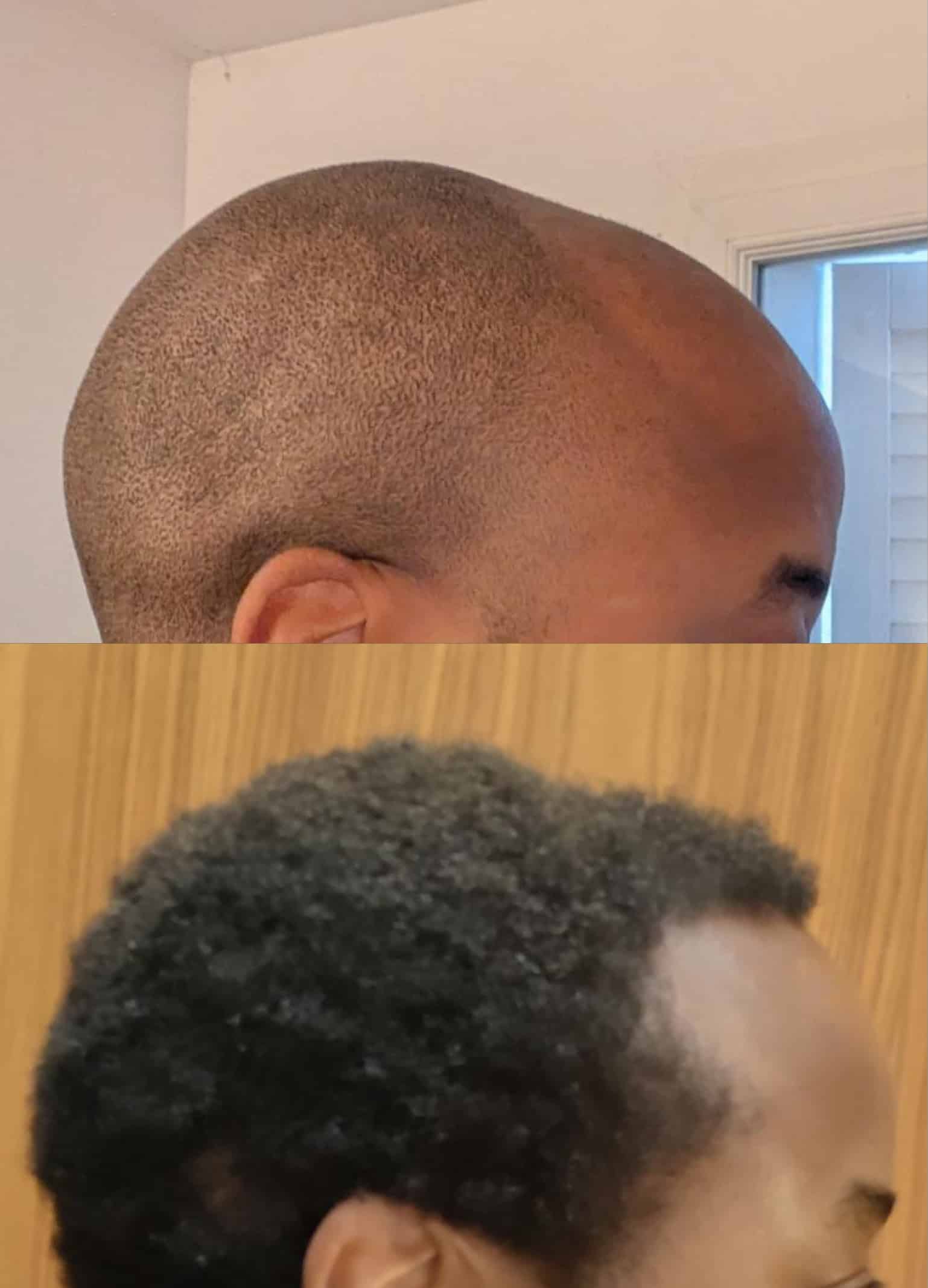
Valentino
Formule 4 — 4000 greffons — 4250€
Expert en coaching sport santé, notre patient a bénéficié d'un parcours sur mesure adapté à sa pratique
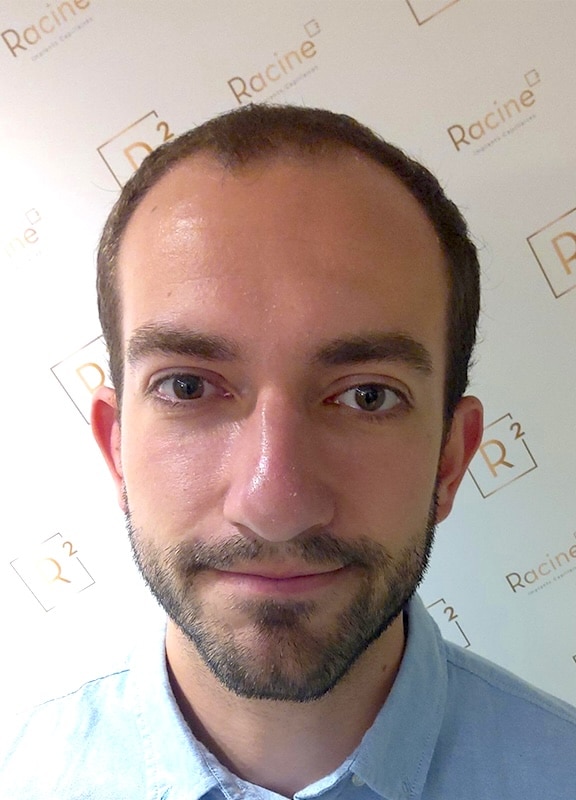
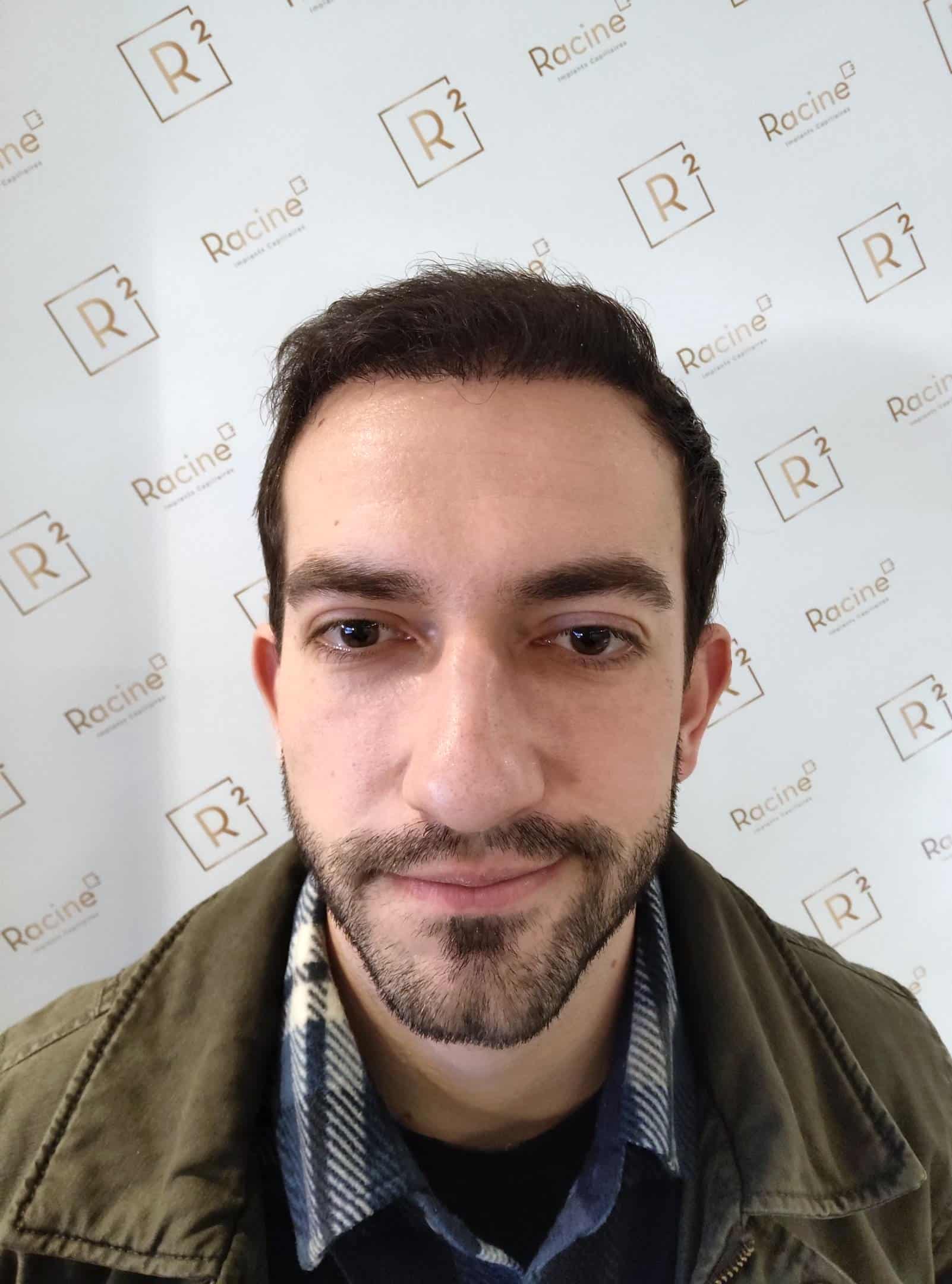
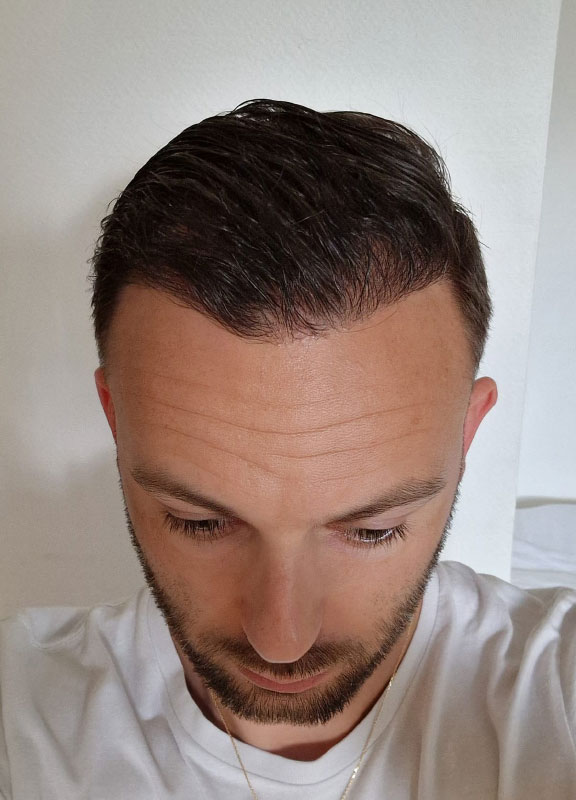
Théo
Formule 4 — 3500 greffons — 4250€
6 mois après l'intervention toute en douceur, des résultats déjà évidents
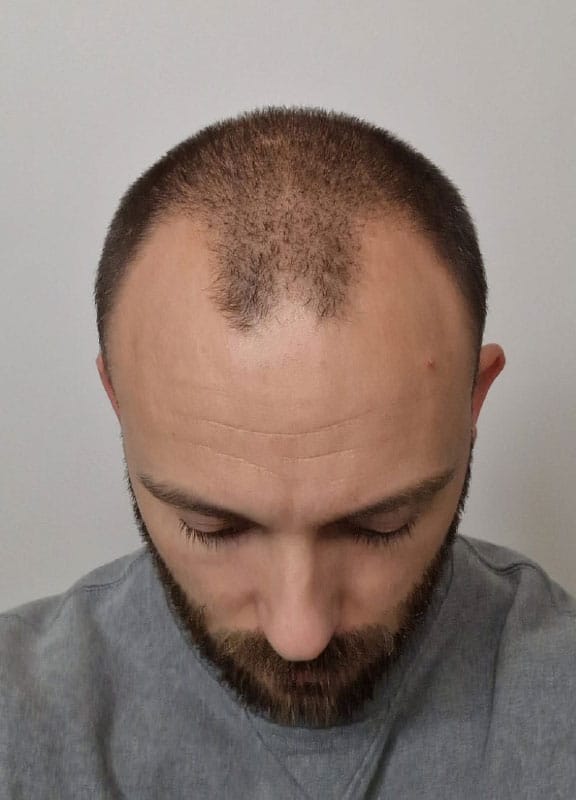
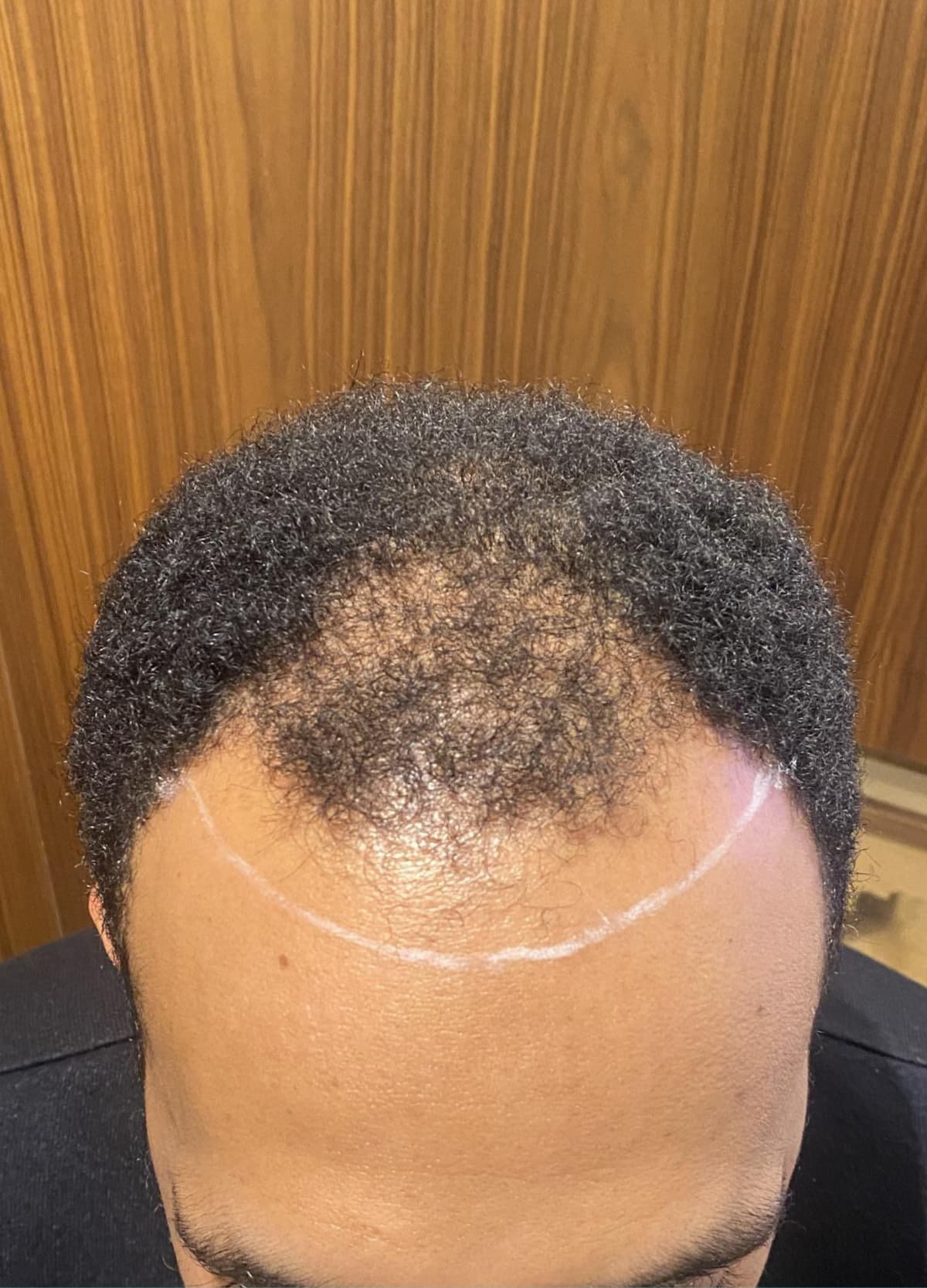
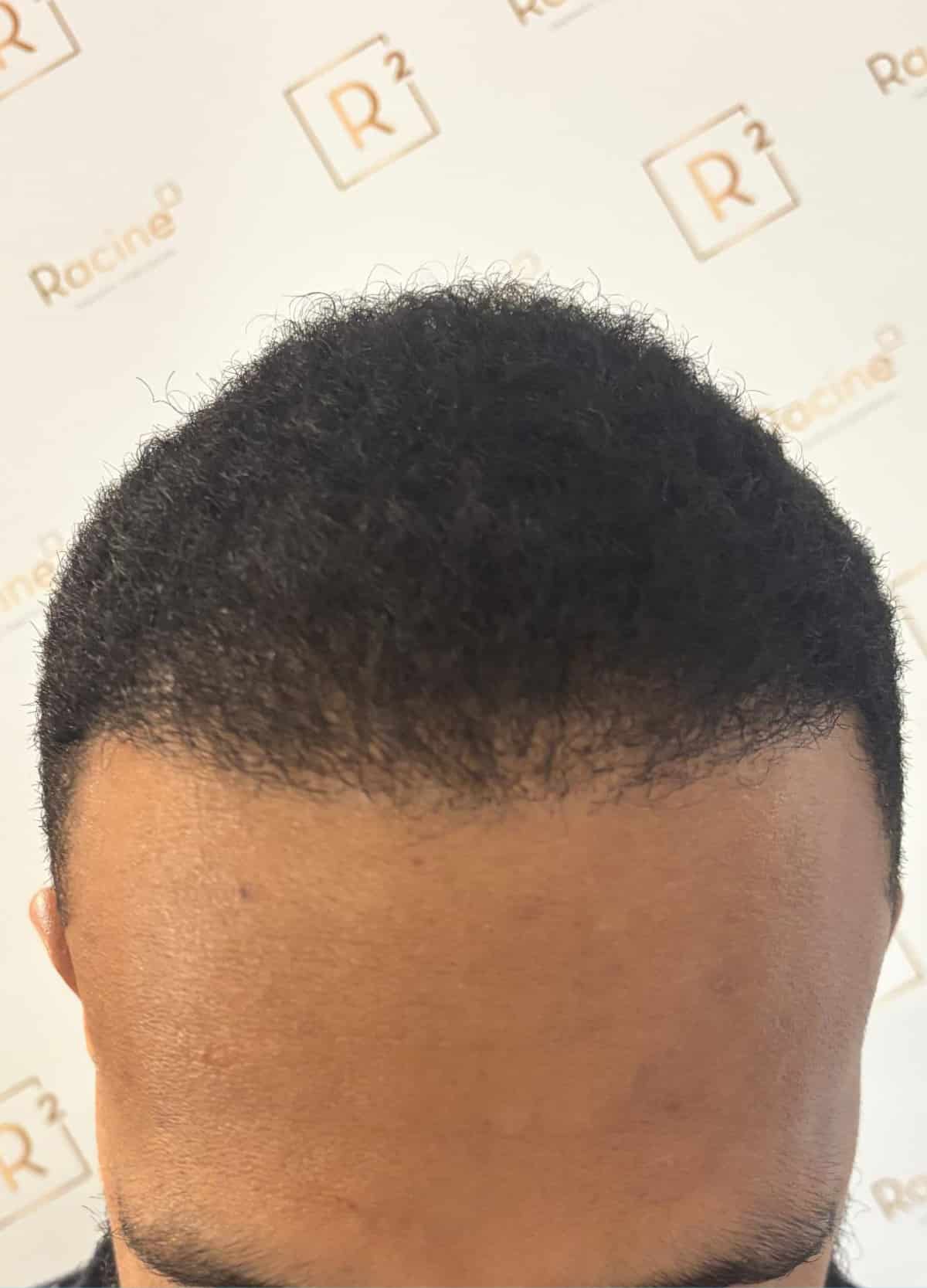
Gaëtan
Formule 3 — 3000 greffons — 3500€
Après seulement 6 mois, un rendu spectaculaire qui a surpassé toutes ses attentes.
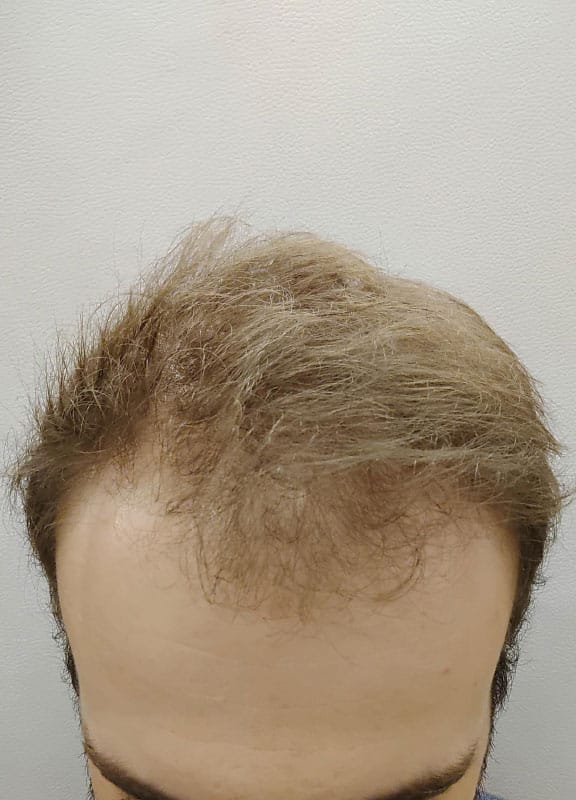
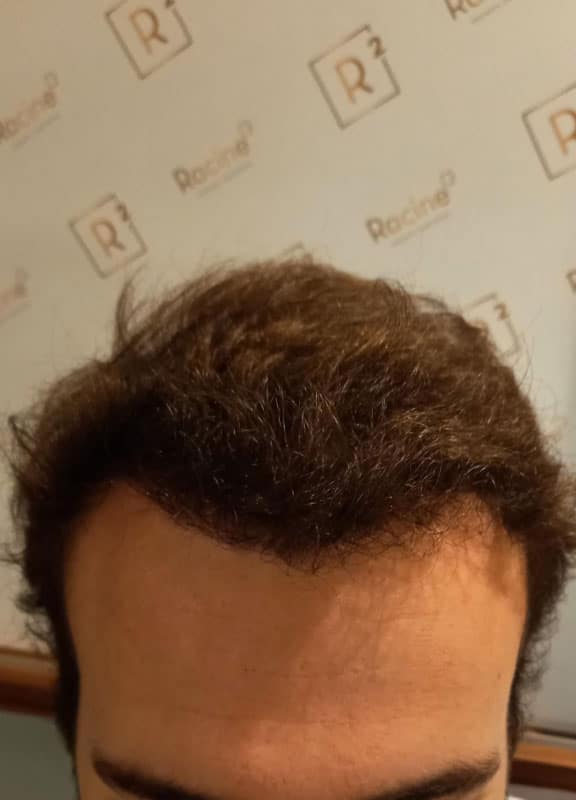
Pierre
Formule 4 — 3500 greffons — 4250€
Une densité reconquise sur la hairline, les tempes et la zone fronto-pariétale.
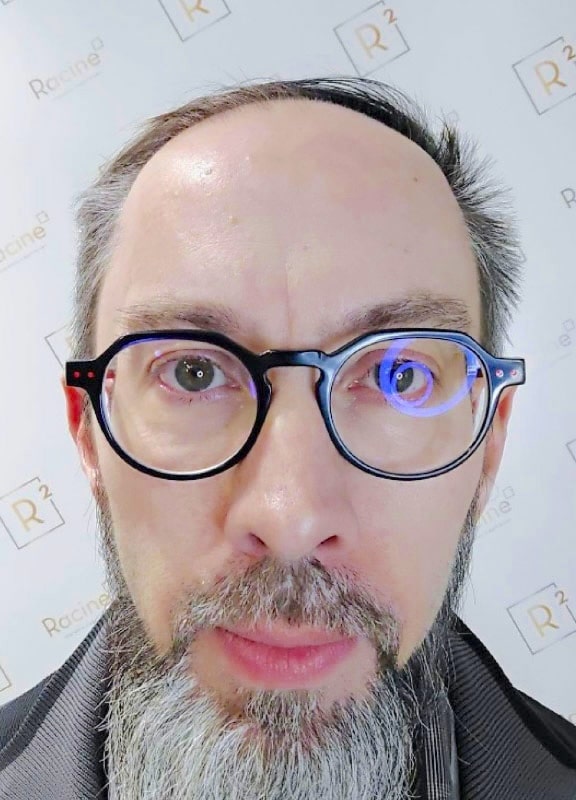
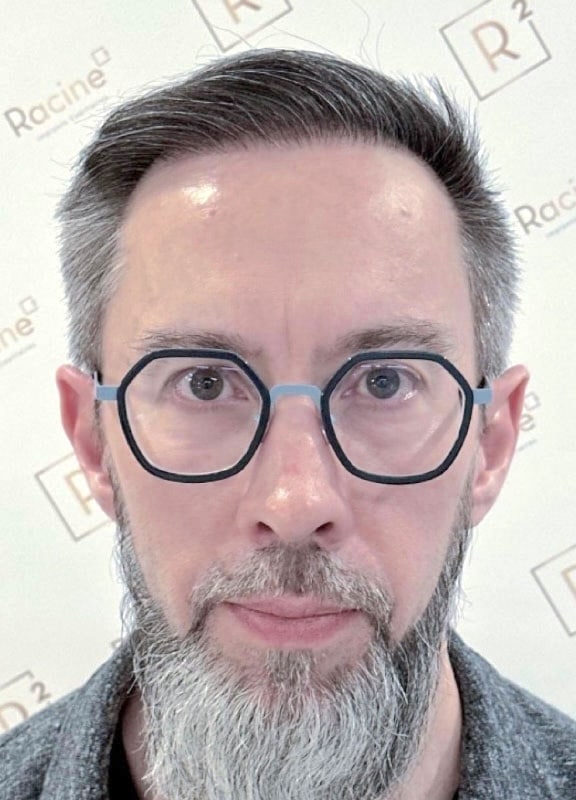
Yoann
Formule 3 — 3000 greffons — 3500€
Une restauration de densité qui change la vie. Des séances de PRP thérapeutique ont accéléré la repousse.
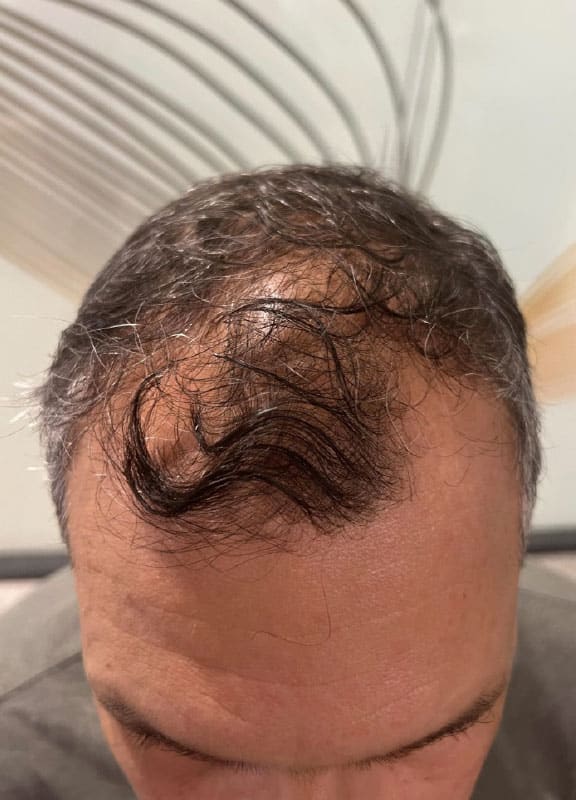
Olivier
Formule 3 — 3000 greffons — 3500€
Après 12 mois, les résultats définitifs (et sublimes) d'une greffe de cheveux FUE réalisée chez Racine Carrée
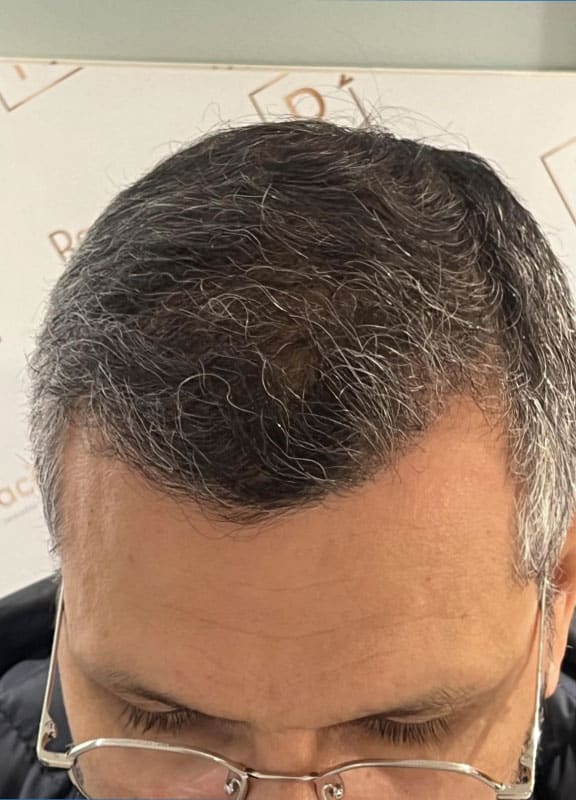
Lotfi
Formule 3 — 3000 greffons — 3500€
Une fois de plus, Racine Carrée a fait des miracles après seulement 5 mois. Hâte d'admirer le résultat final à 12 mois.
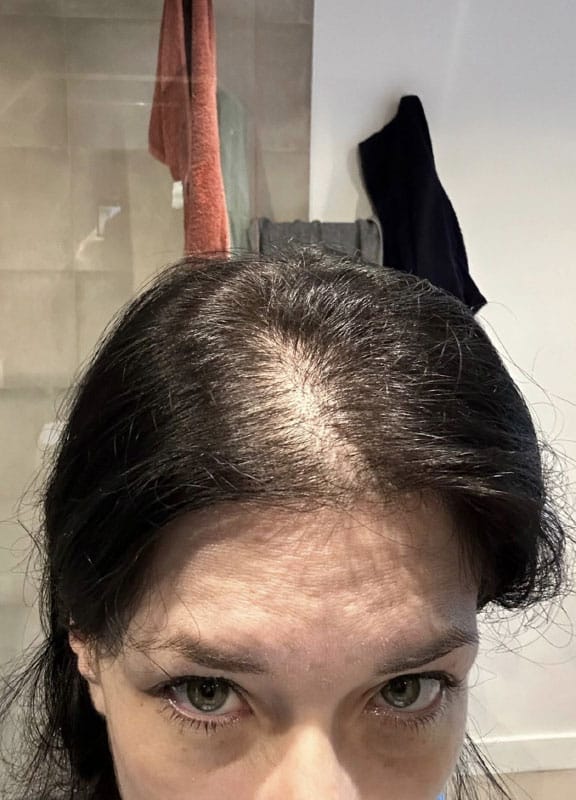
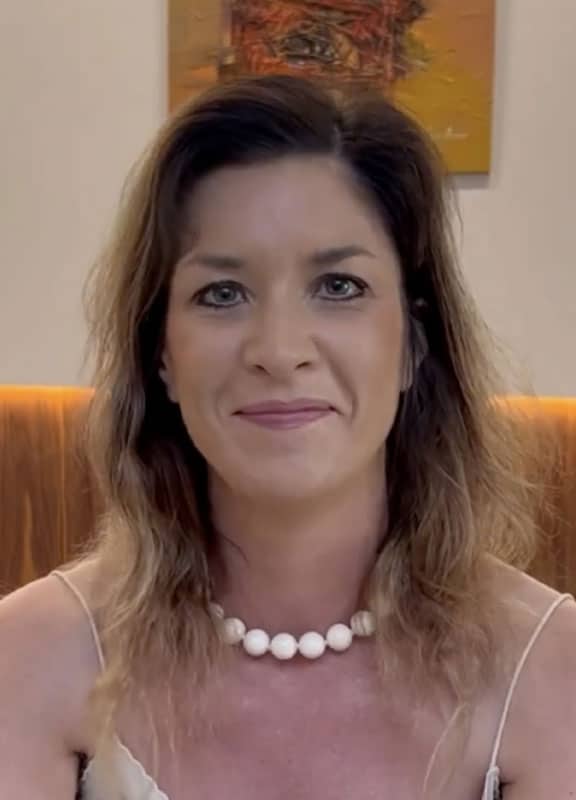
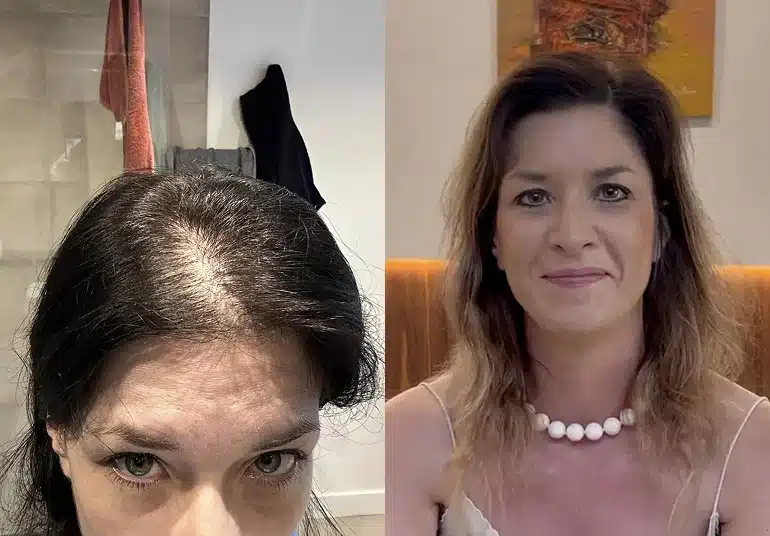
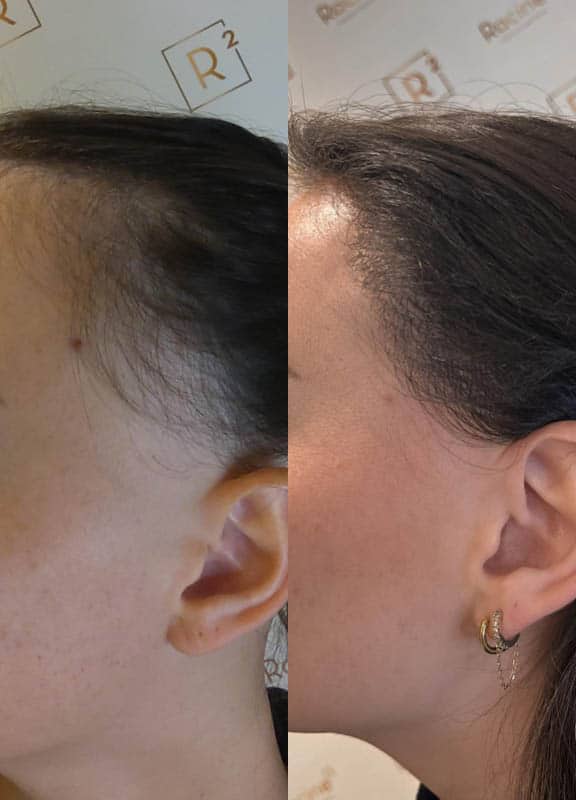
Élodie
Formule 2 — 2000 greffons — 2750€
L'alopécie féminine est particulièrement dure à vivre. Réalisée avec rasage partiel, sa greffe a effacé ses complexes.
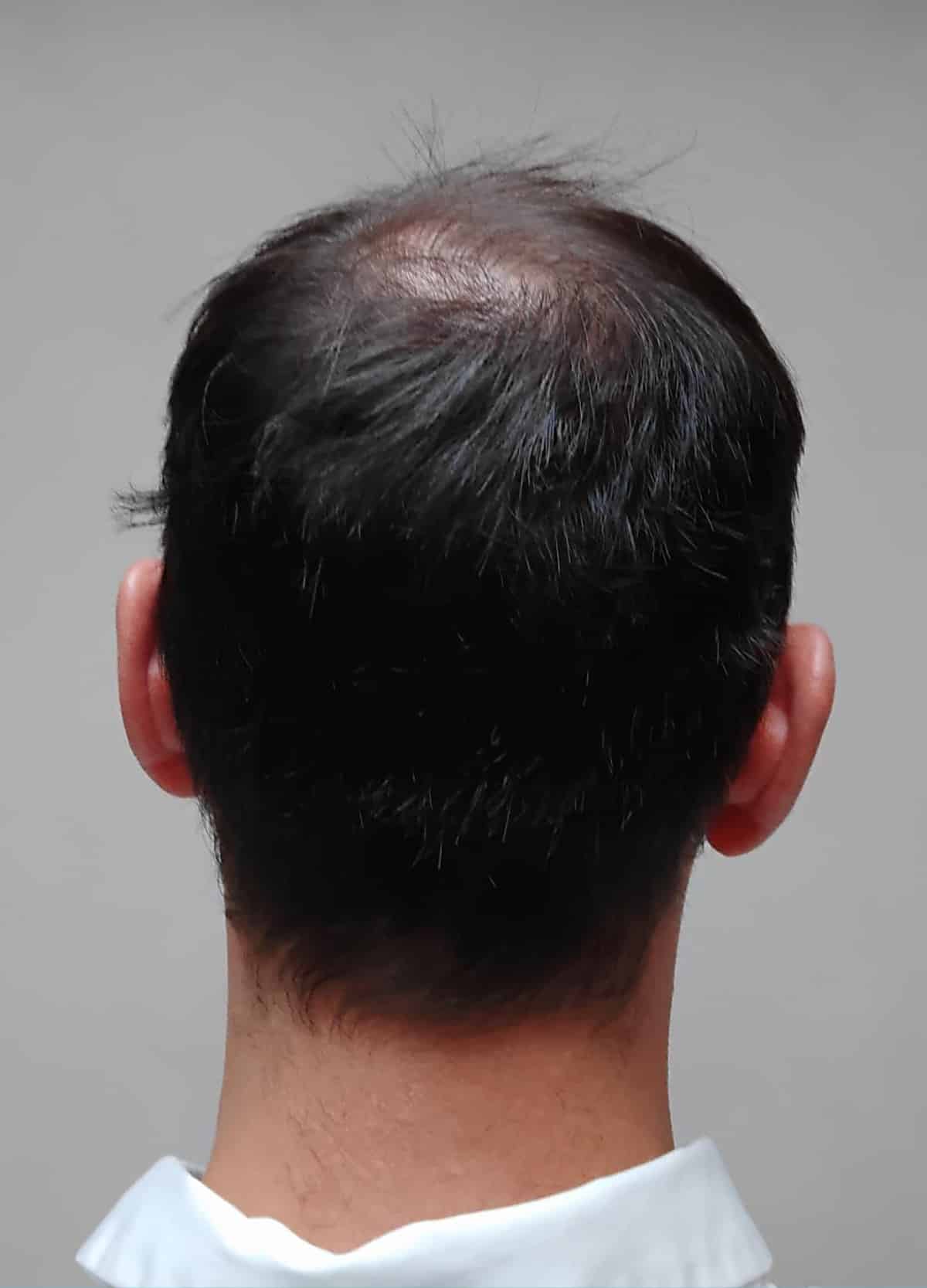
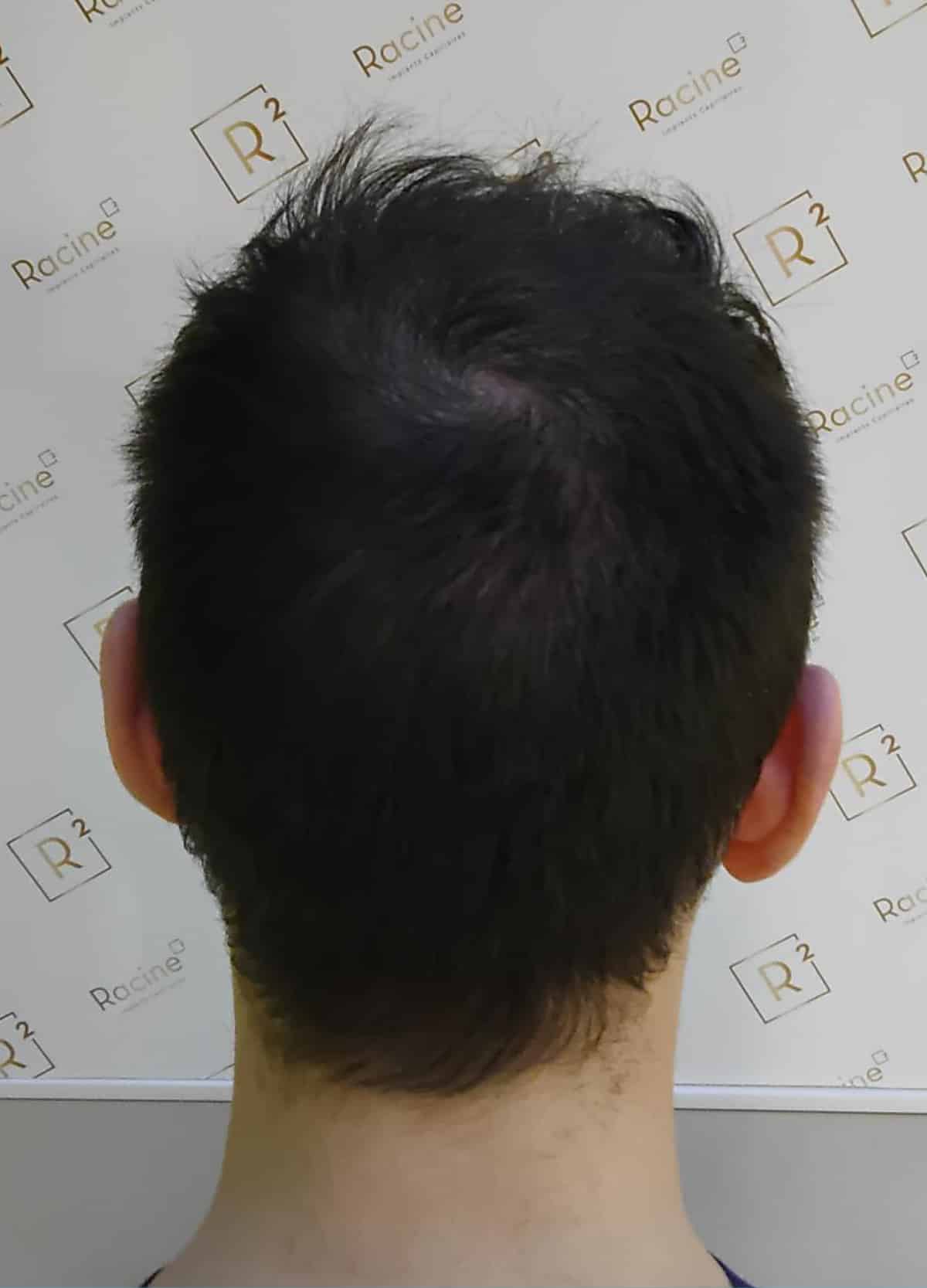
Édouard – Vertex
Formule 3 — 2900 greffons — 3500€
Un vertex déjà largement restauré après 6 mois. Les résultats finaux seront atteints au bout 12 à 18 mois.
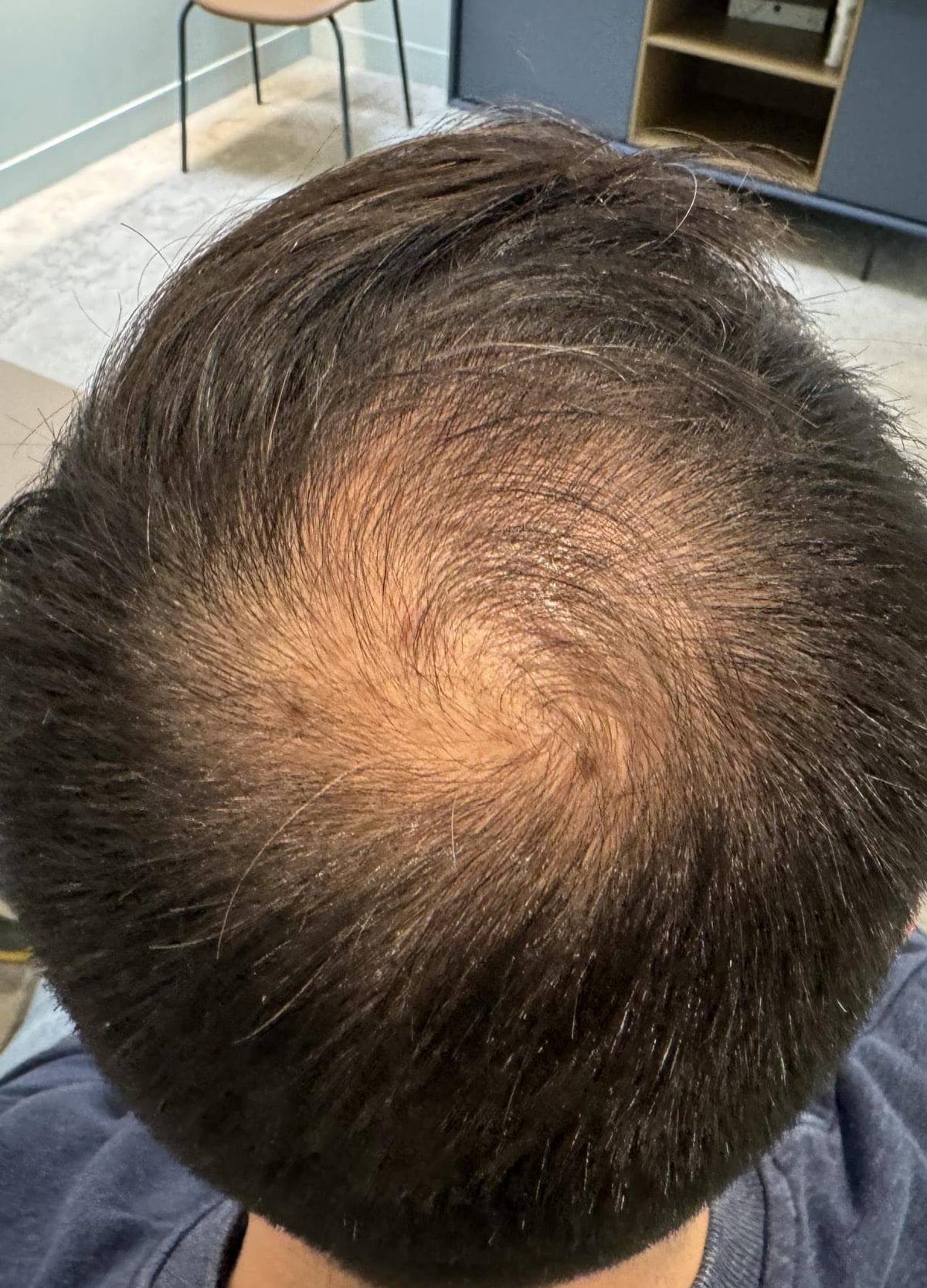
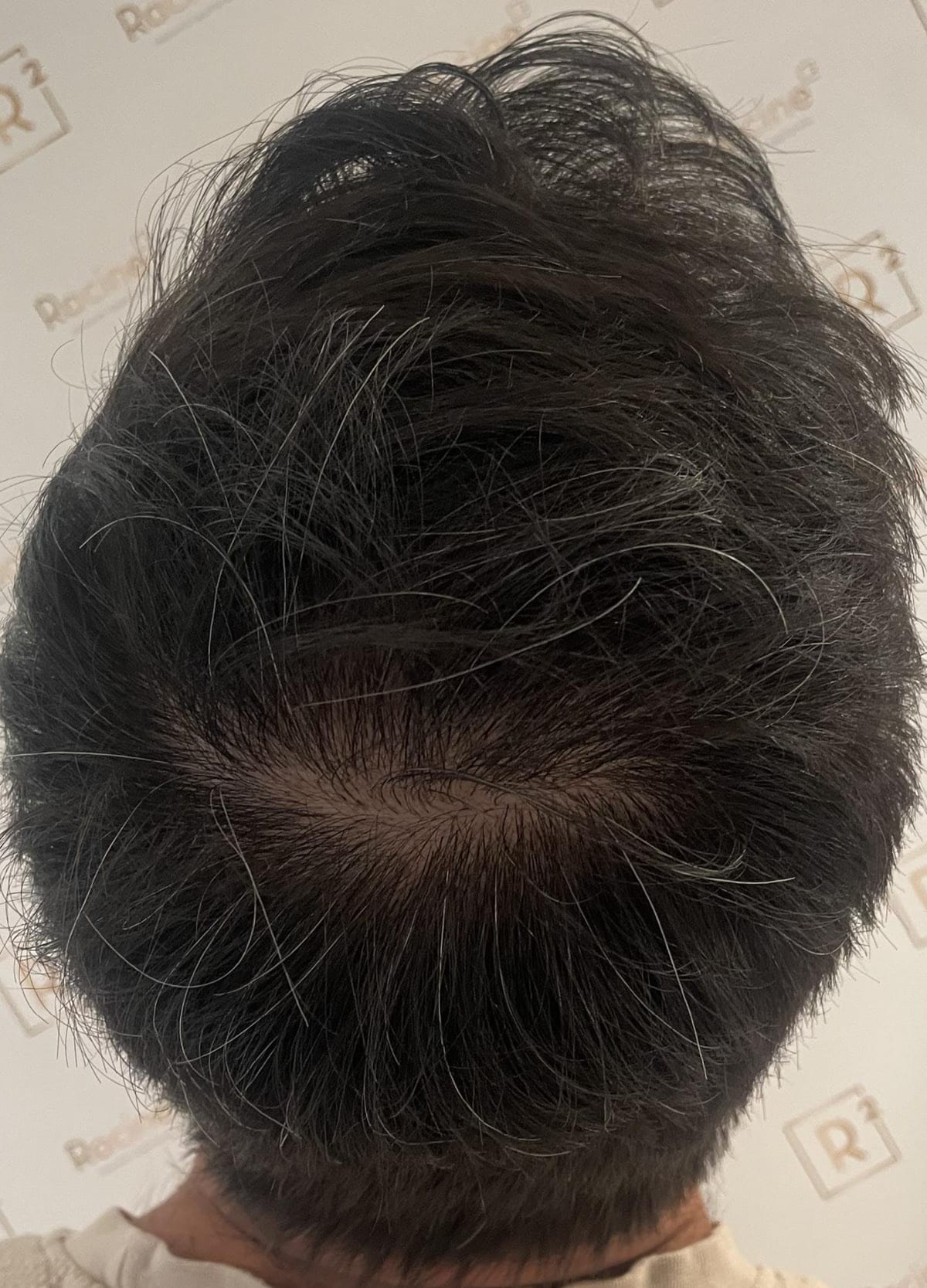
Guillaume – Vertex
Formule 3 — 3000 greffons — 3500€
Une petite année après sa greffe, le vertex dégarni de Guillaume n'est plus qu'un lointain souvenir.
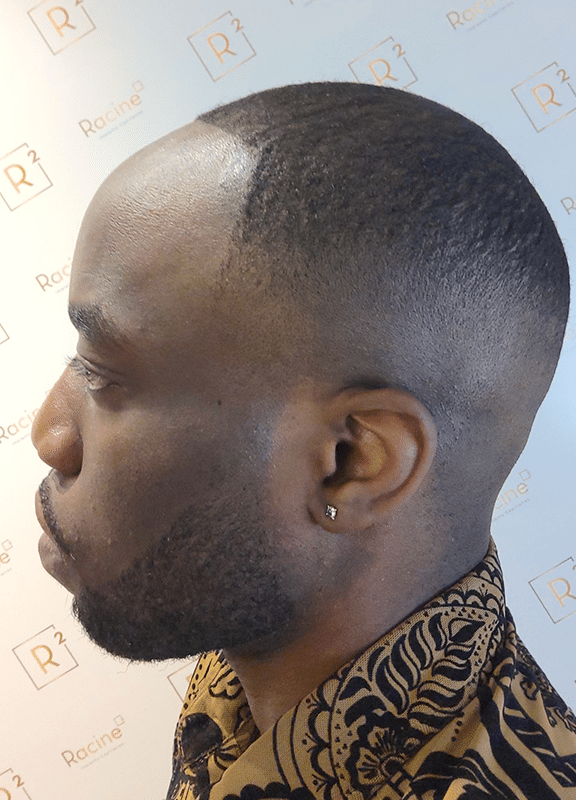
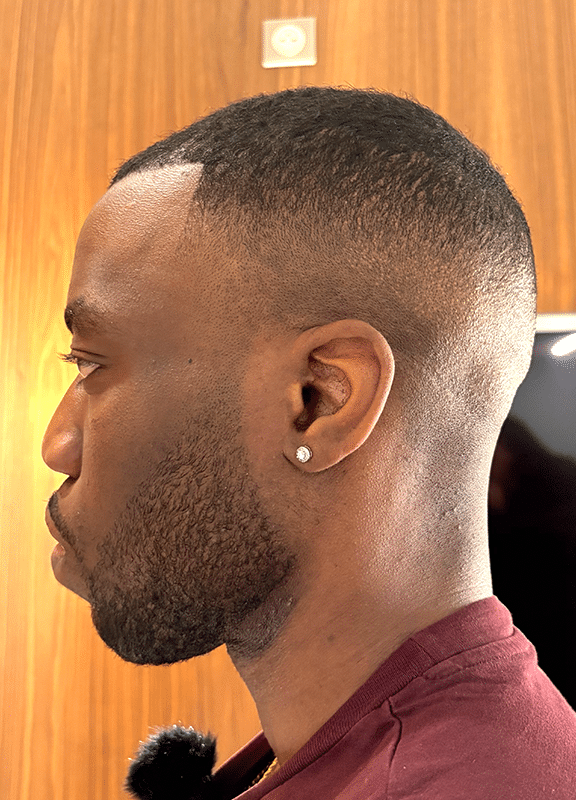
Kévin (vue de profil)
Formule 3 — 3000 greffons — 3500€
Cette vue complémentaire permet de constater la redéfinition complète de la hairline de Kévin
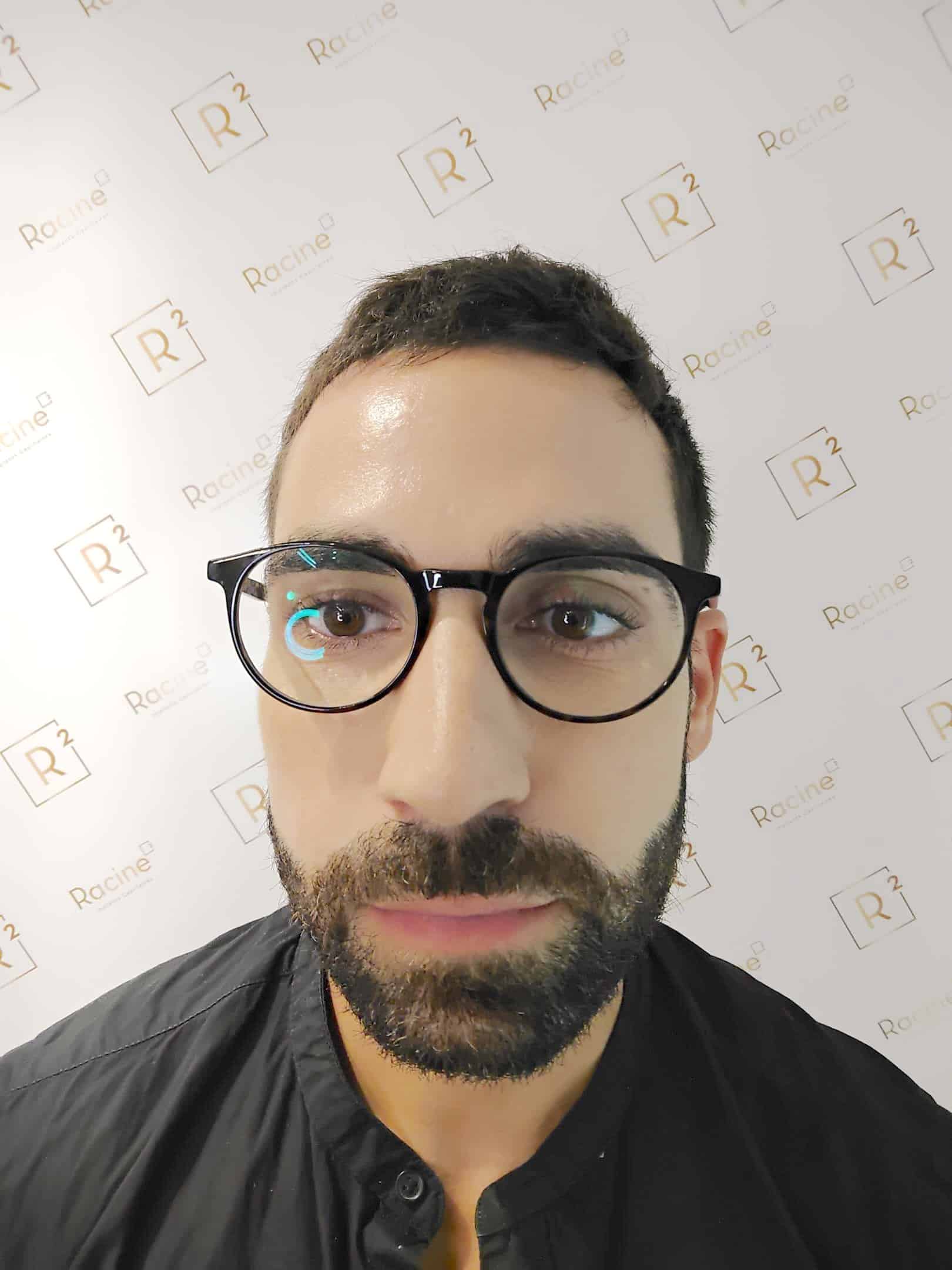
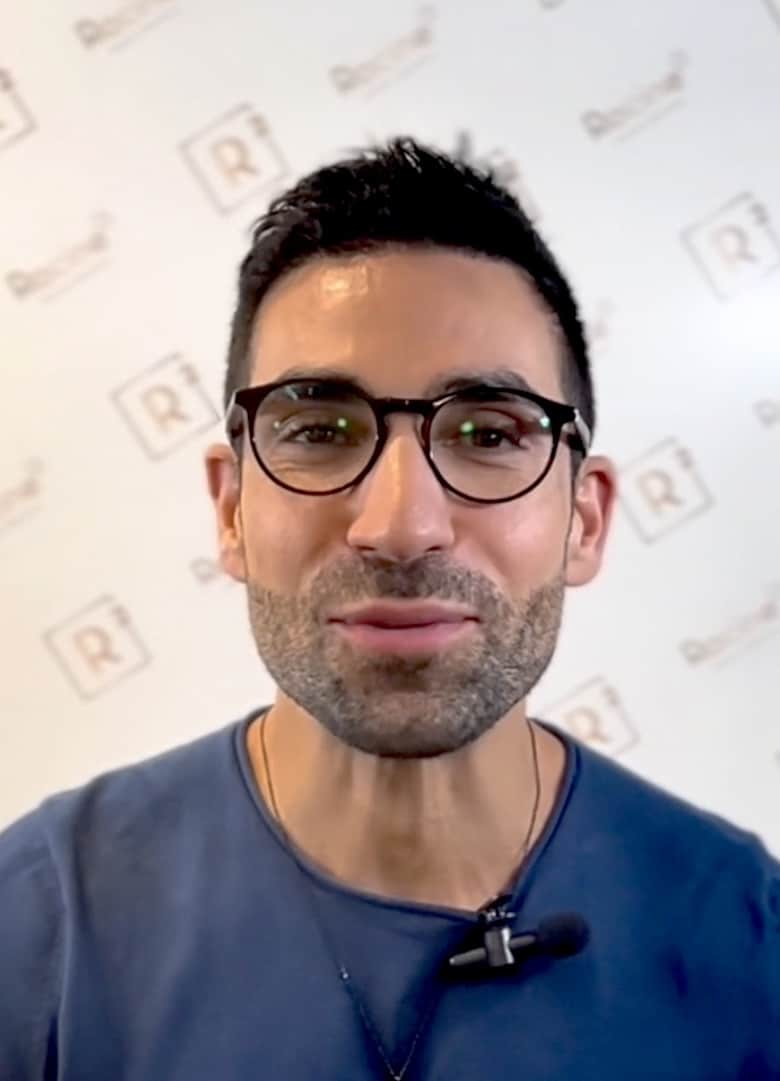
Romain – Golfes et ligne frontale
Formule 3 — 2900 greffons — 3500€
Un parcours d'une fluidité totale pour redensifier ses golfes et perfectionner sa ligne frontale
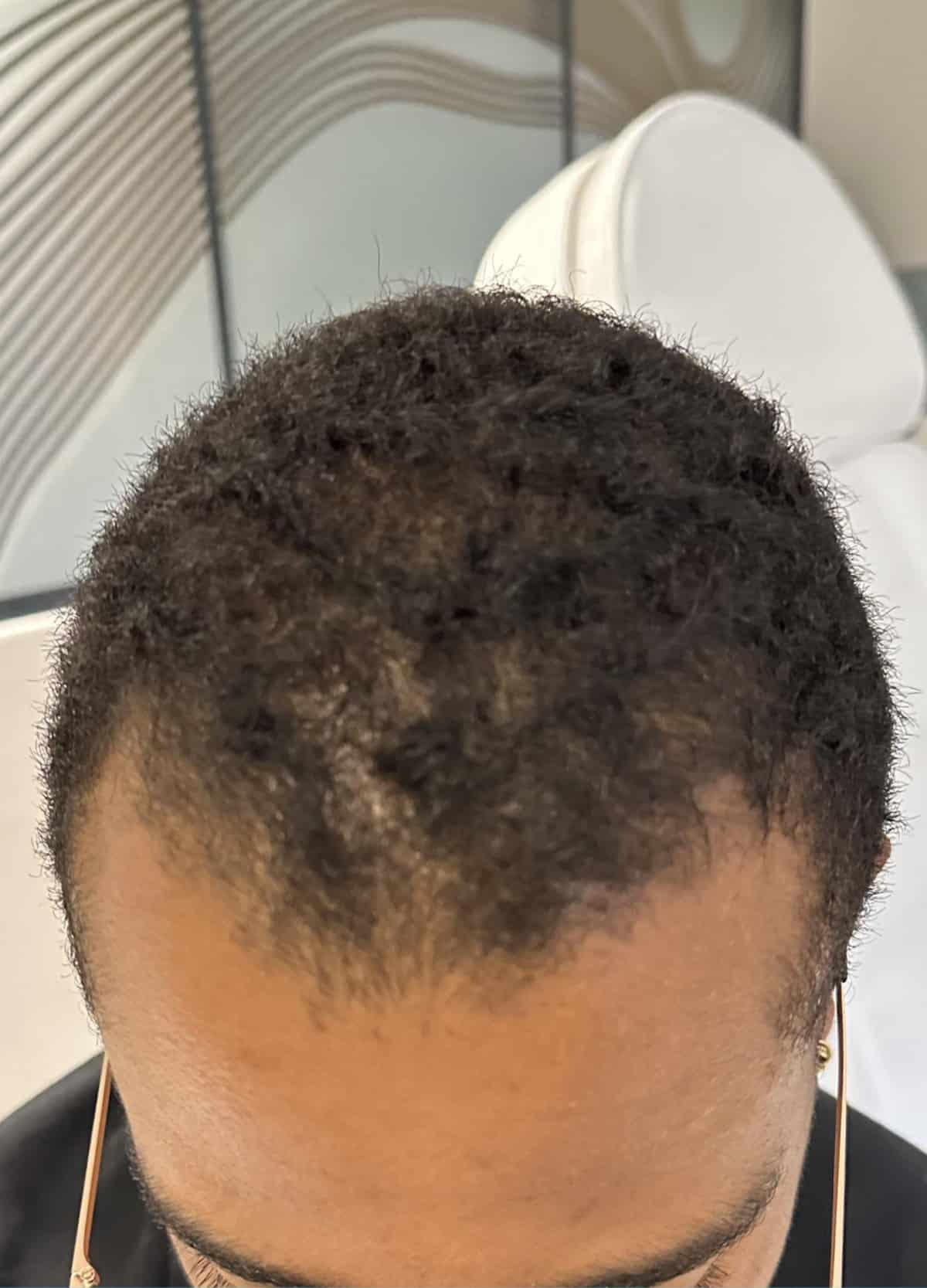
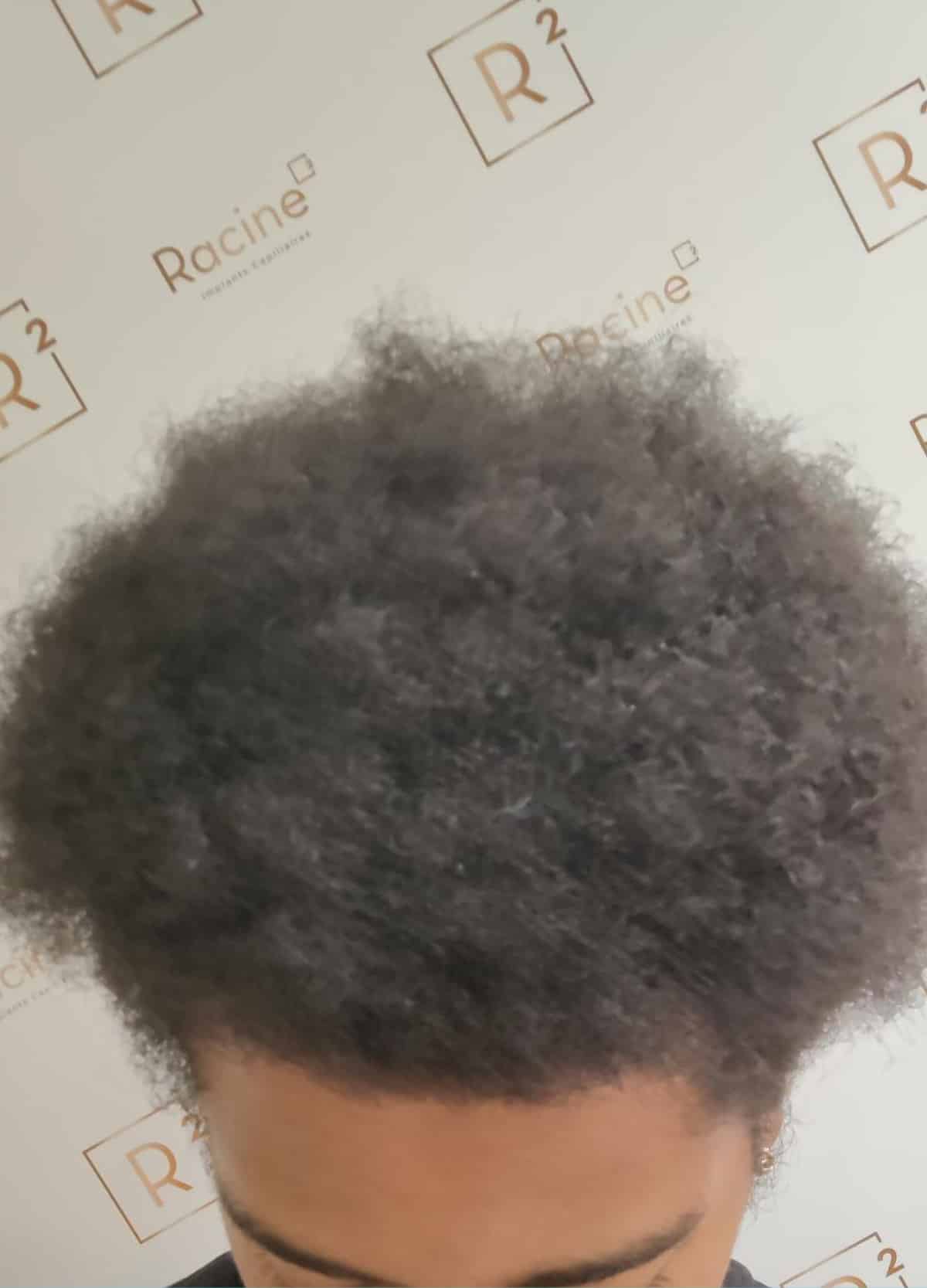
Cyril
Formule 3 — 2600 greffons — 3500€
Une densité reconquise sur la hairline, les tempes et la zone fronto-pariétale.
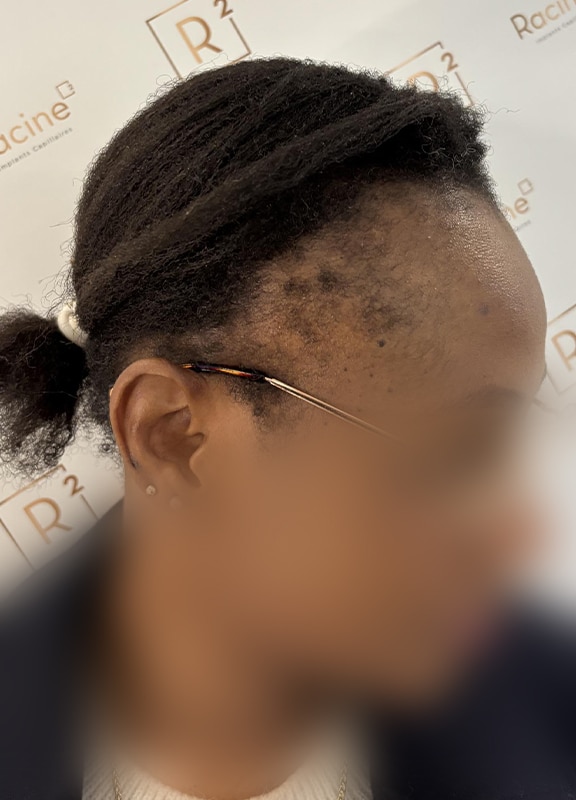
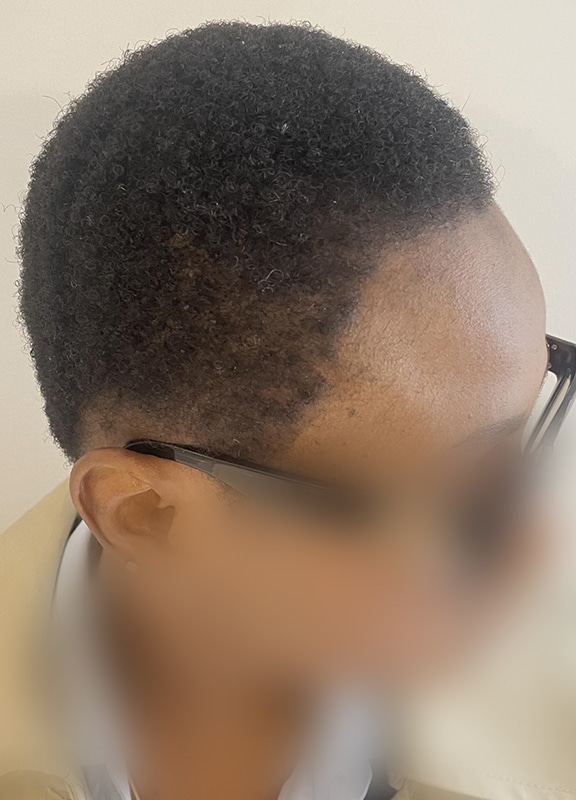
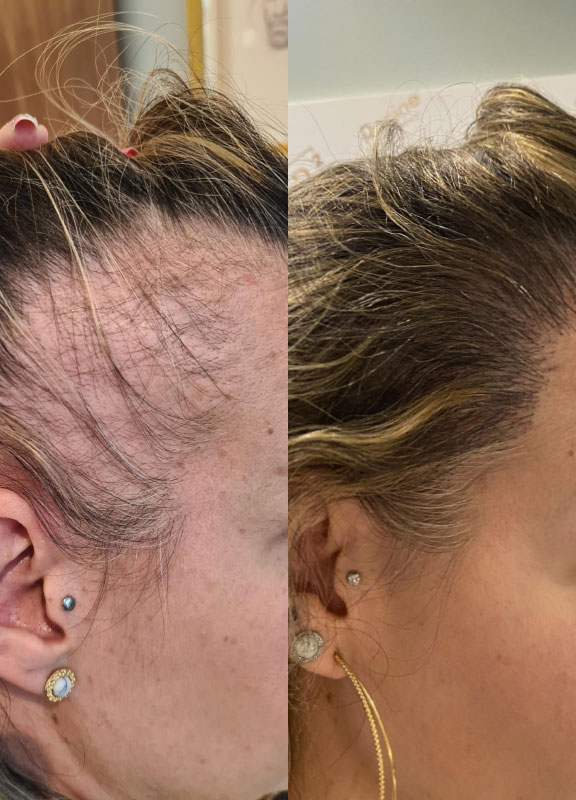
Eva
Formule 3 — 2400 greffons — 3500€
En moins de 6 mois, une alopécie de traction déjà fortement atténuée, en attendant les résultats finaux (12 à 18 mois)
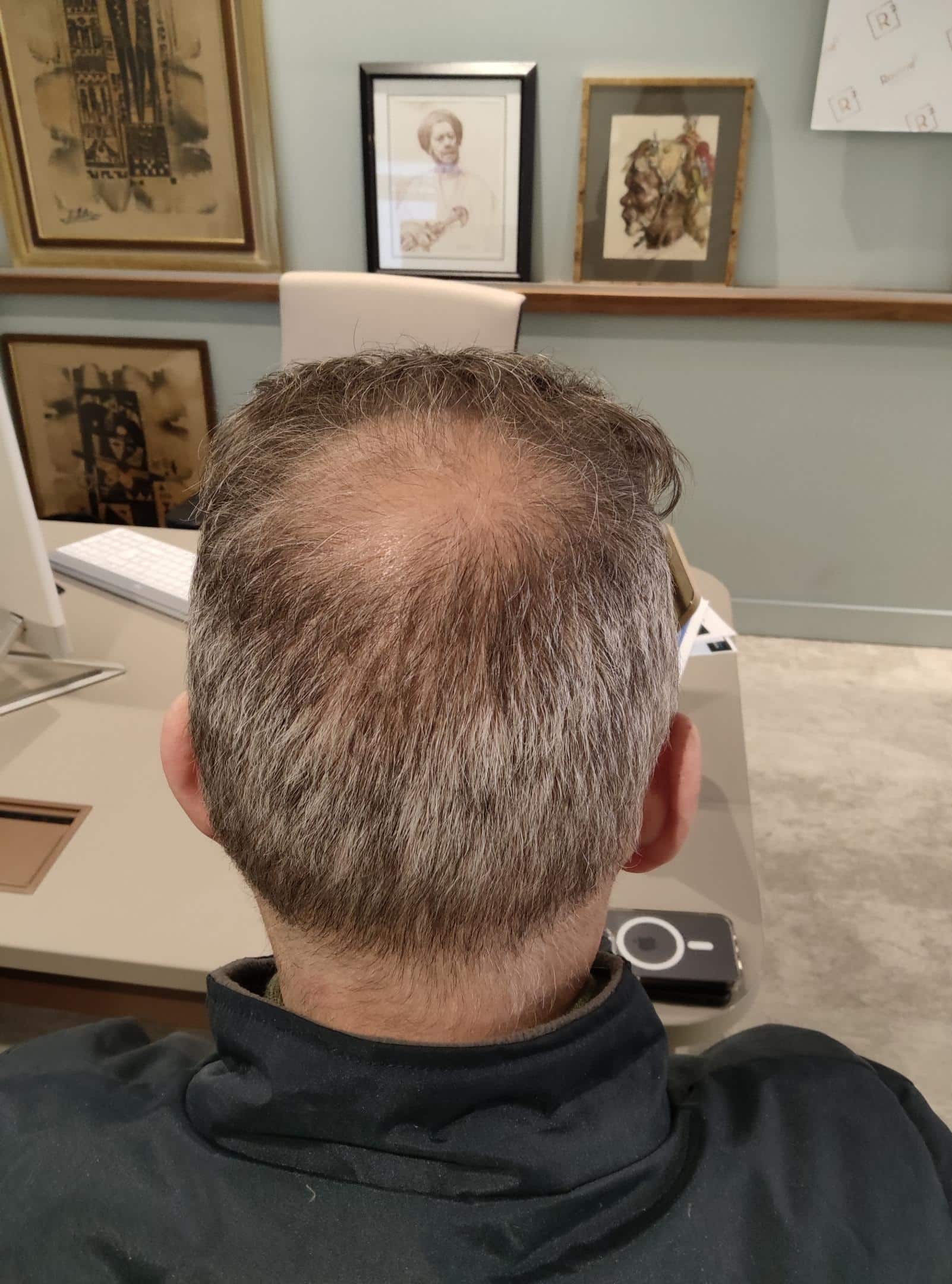
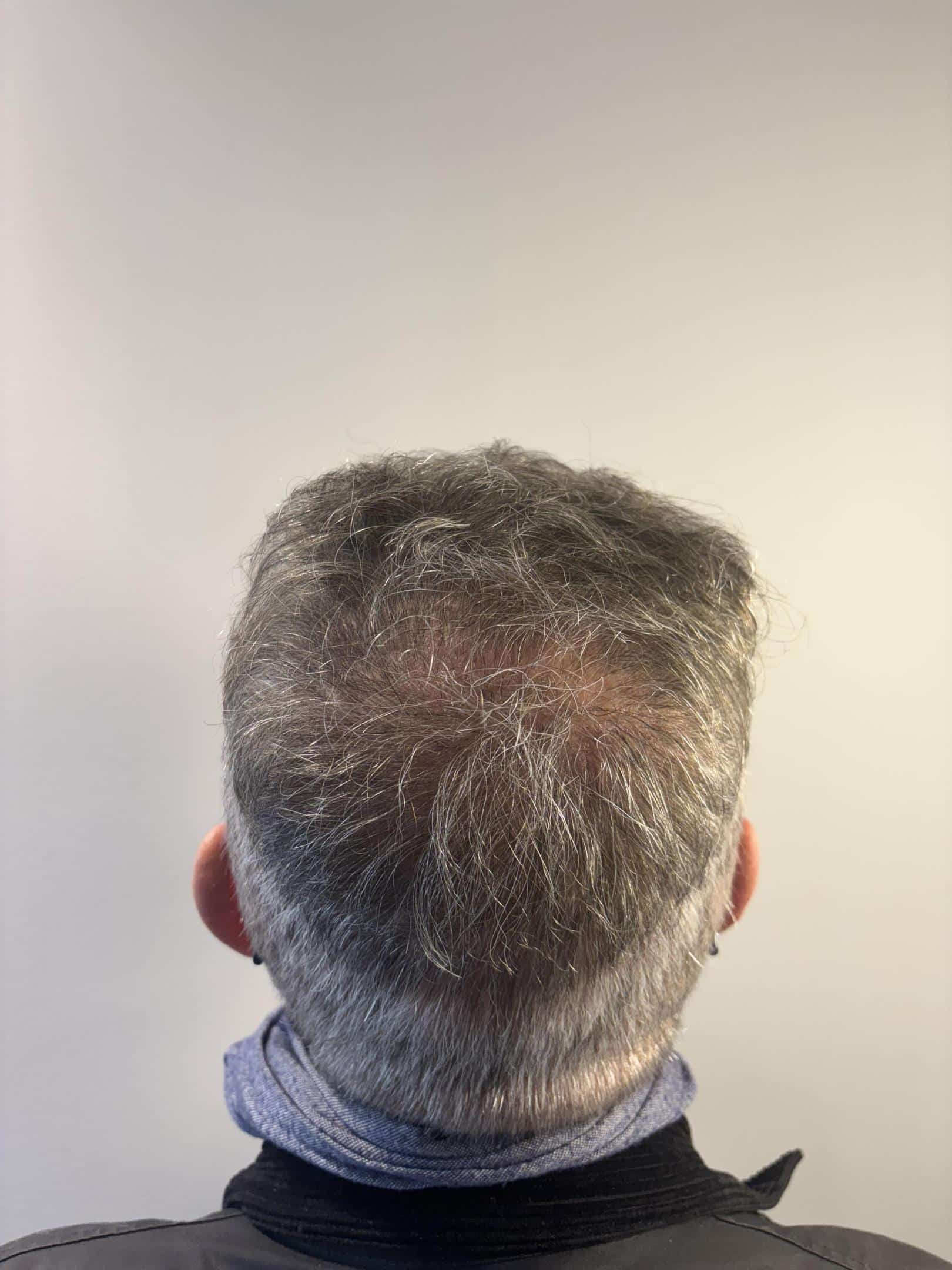
Franck – Vertex
Formule 4 — 3600 greffons — 4250€
Après 6 mois, un vertex déjà bien redensifié et une zone donneuse respectée. Résultats définitifs attendus entre 12 et 18 mois.
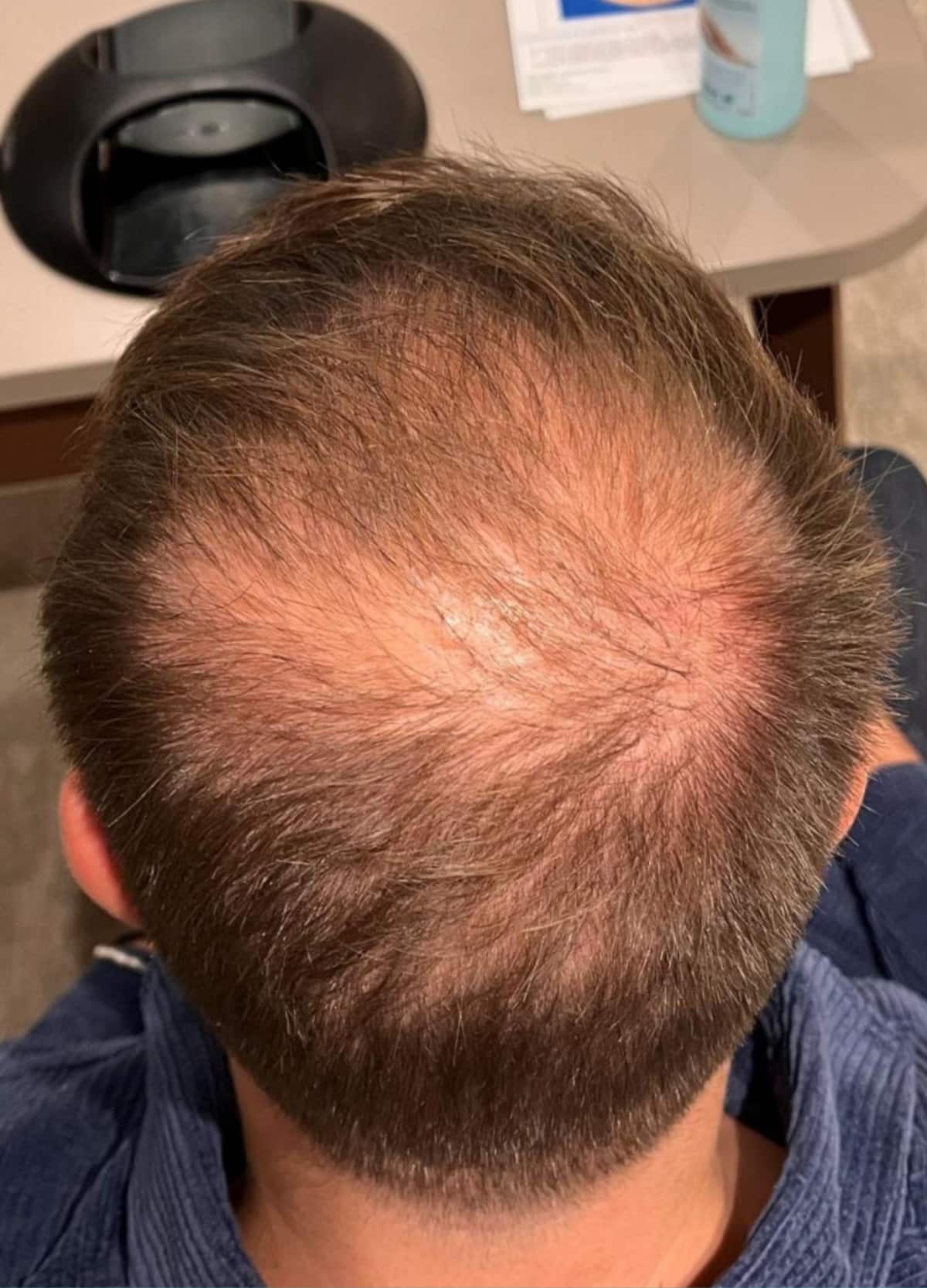
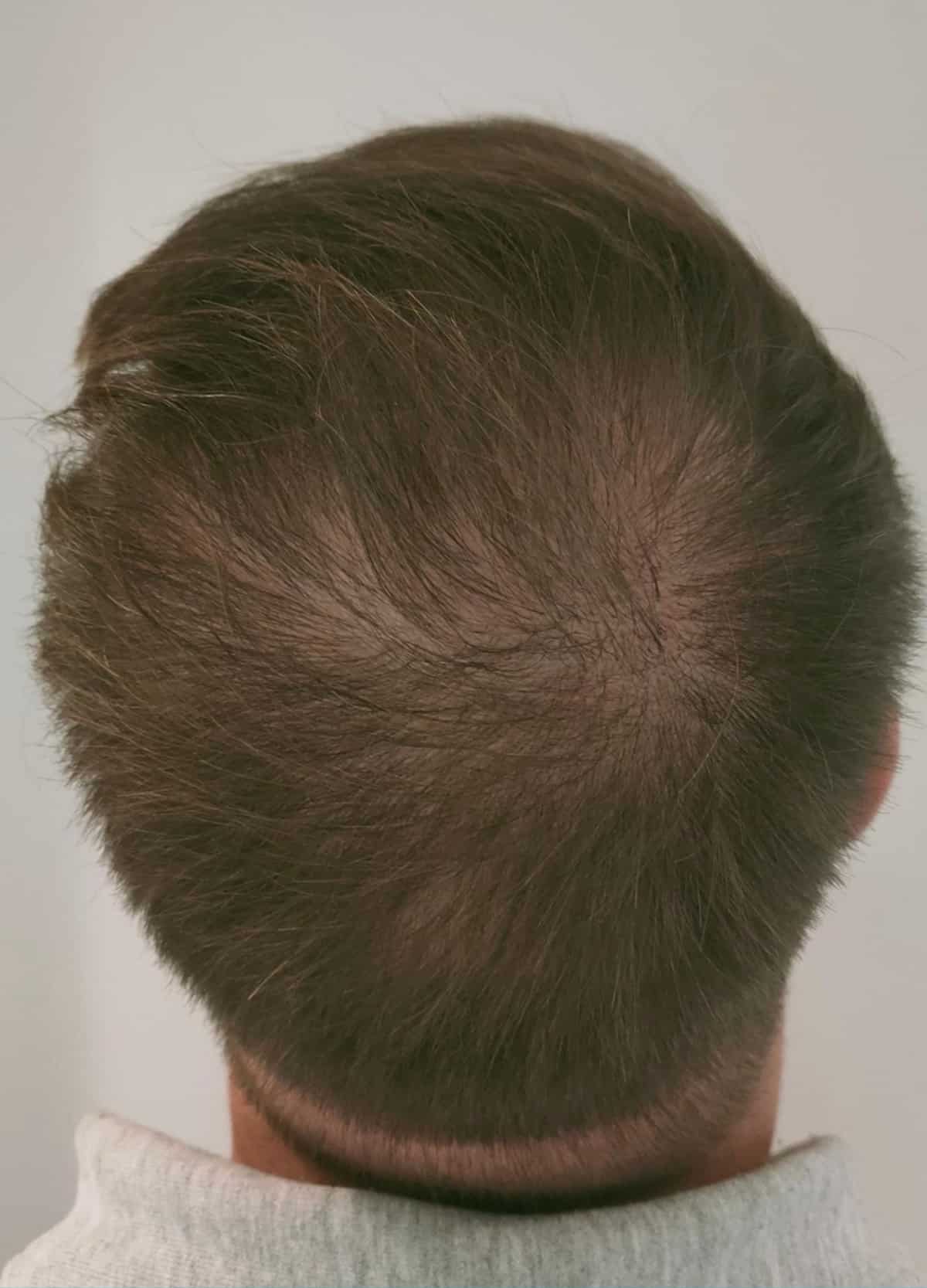
Julien – Vertex
Formule 4 — 3400 greffons — 4250€
Une redensification du vertex qui porte ses fruits après seulement 6 mois. Résultats définitifs attendus entre 12 et 18 mois.
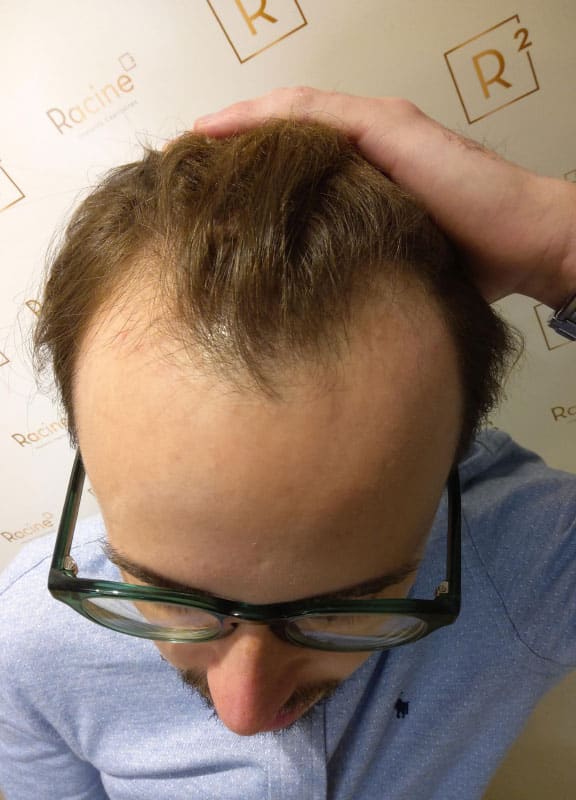
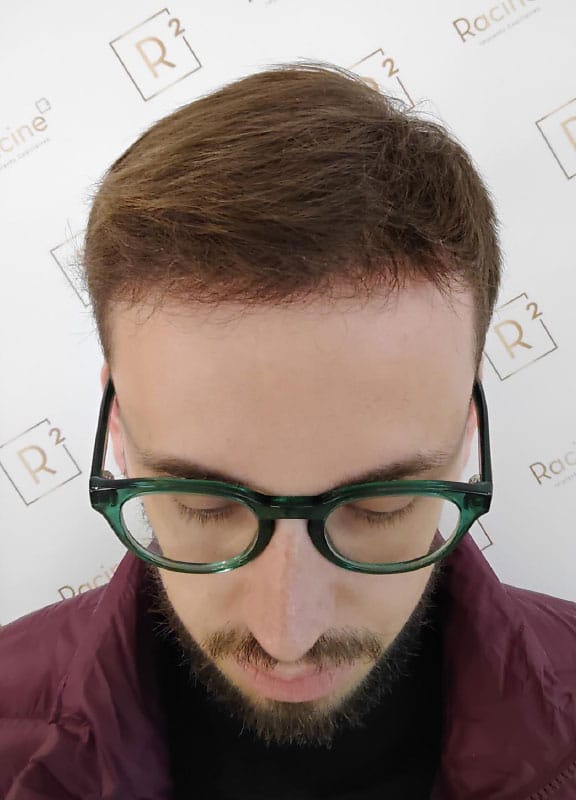
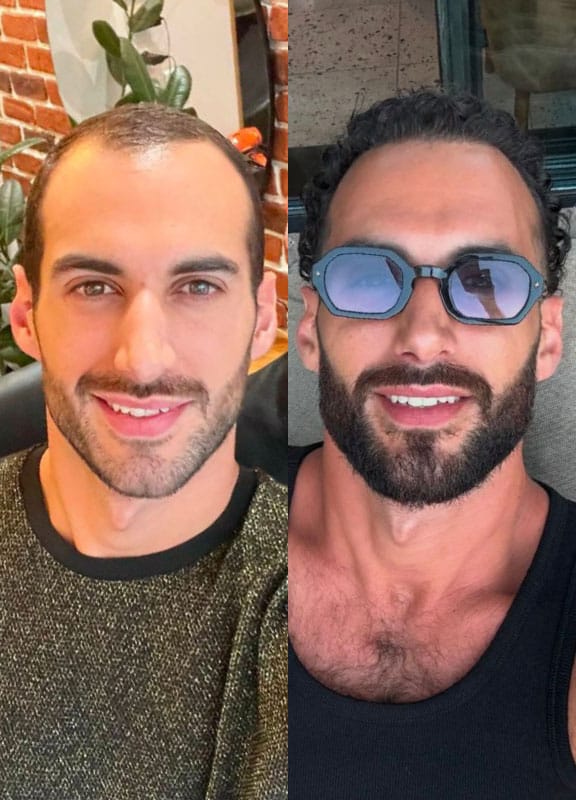
Valentin
Formule 3 — 3000 greffons — 3500€
La greffe s'est imposée comme la solution idéale pour contrer les effets d'une alopécie androgénétique agressive malgré le jeune âge du patient.
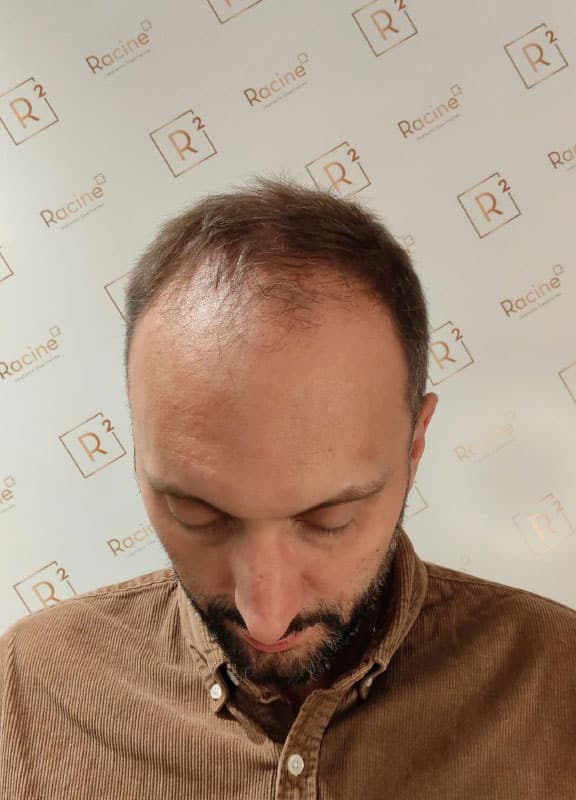
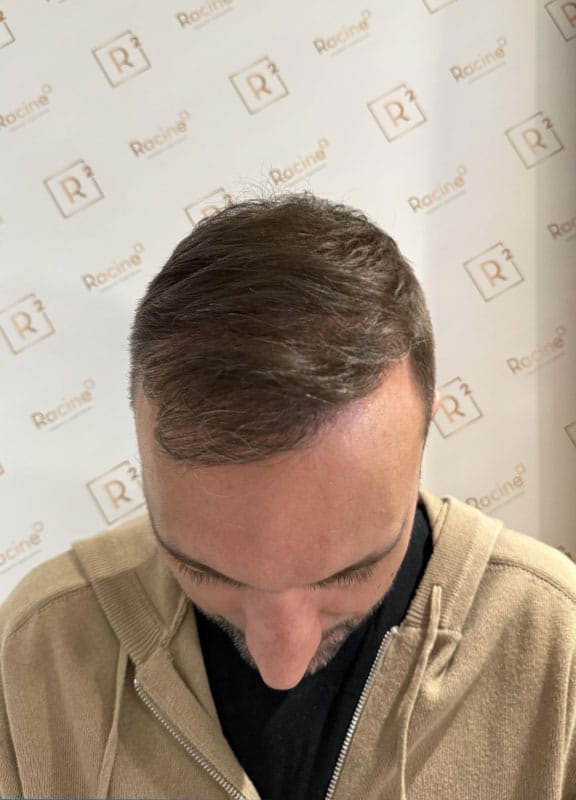
Luc
Formule 3 — 3000 greffons — 3500€
Malgré des cheveux fins et une zone importante à restaurer, un compromis idéal et harmonieux a donné entière satisfaction à notre patient.
A unique concept praised by the media





Our hair transplants start at €2,000 for treatment of a small area. Our most comprehensive packages are available at €4,250, at prices never before seen in France for this level of service.
All our prices include the one-day procedure, a comprehensive hair assessment, 12 months of medical follow-up (appointments at 1 month, 6 months, and 1 year), and a complete post-transplant care kit.
At Racine², we master the two most advanced FUE hair transplant techniques. The Sapphire Blade allows us to create exceptionally fine incisions, providing ultra-precise implantation angles.
The CHOI implanter makes the incision and reimplantation in a single motion, making it the preferred technique for patients who do not wish to shave the recipient area.
The price mainly depends on the number of grafts required, which is determined by the size of the area to be treated, the capacity of the donor area, and the characteristics of your hair.
The technique chosen also plays a role: the CHOI method takes longer to perform than the Sapphire technique, making it more expensive. A personalized assessment is essential to provide an accurate quote.
Every procedure at Racine² includes 12 months of follow-up, with a dedicated phone and WhatsApp support line, check-ups at 1, 6, and 12 months, a post-transplant care kit (comfort pillow, dietary supplements, and a 6-month hair care treatment), and a session with our barber to support the regrowth process. No hidden fees, complete transparency.
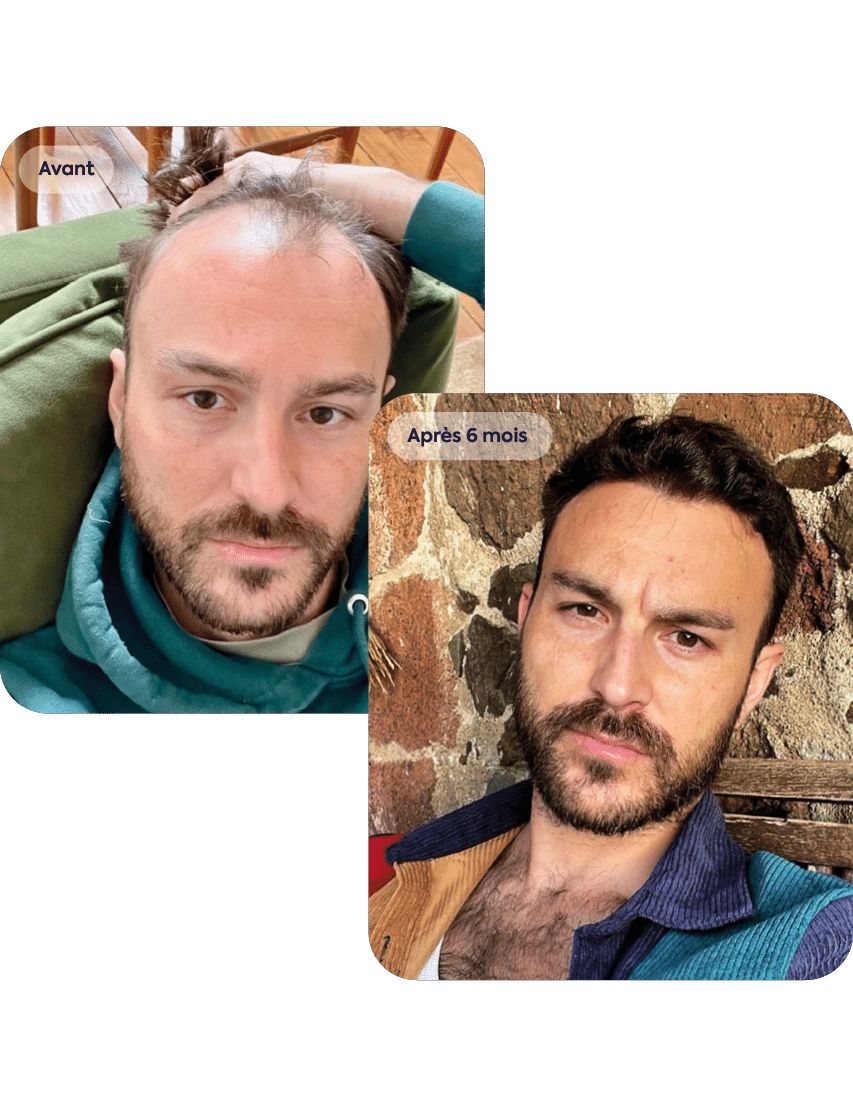
Pack 1
FUE Hair Transplant
Saphir Technique
500 to 1 000 grafts
One-day intervention
2 000 €
Choï Technique
2 750 €
Pack 2
FUE Hair Transplant
Saphir Technique
1 100 to 1 900 grafts
One-day intervention
2 750 €
Choï Technique
3 500 €
Pack 3
FUE Hair Transplant
Saphir Technique
2 000 to 3 000 grafts
One-day intervention
3 500 €
Choï Technique
4 250 €
Pack 4
FUE Hair Transplant
Saphir Technique
3 100 grafts and more
One-day intervention
4250 €

One year of ongoing follow-up with 3 check-ups

Dedicated, responsive direct phone line

Dedicated WhatsApp channel with your expert

A session with our specialist hairdresser

Spotify and Netflix during your hair transplant

Private, secure recovery room and refreshments

Digital space. Advice sheets and video tutorials.

Comfort pillow, spray, and dietary supplements.

July or August
FUE hair transplant in a single day. Return home the same evening. You can return to work as early as the next day.

After 11 days
Scabs have disappeared, and healing is well underway. You can resume an almost normal routine, with the option to wear a hat.
Enjoy the summer
By following a few simple guidelines, you can make the most of your precious moments.

Back to school
The redness will have disappeared or will be significantly reduced.

Shh, it’s growing!
The transplanted hair begins its regrowth phase, supported by the benefits of summer.

First results
Significant hair regrowth is visible for most patients.

Almost there
Near-final results. Up to 18 months for certain areas.
What precautions should you take after a hair transplant in summer?
Summer requires a few specific precautions to ensure proper healing and optimize hair regrowth. Find out how summer can be a favorable time for a hair transplant.
After a hair transplant, the scalp is more sensitive, and UV rays can cause redness, irritation, or even hyperpigmentation. Here’s how to protect the transplanted area and optimize your results:
The first 2 weeks
Avoid direct sun exposure during the healing and recovery phase.
From day 11 onwards, you can wear a lightweight, breathable hat outdoors.
Then, for the following 6 weeks
When exposed to the sun, use SPF 50 UV protection or wear a loose-fitting hat.
Taking a dip is, of course, tempting in summer. Whether it’s a swimming pool, the sea, or fresh water, you’ll need to avoid swimming and bathing for 1 month. This is probably the biggest compromise you’ll have to make if you choose to have a hair transplant during this season.
Indeed, salt water and chlorine can irritate your scalp, and swimming too soon can increase the risk of infection. Don’t take any risks with the health of your grafts or the healing process.
For 1 month, avoid heavy sweating or activities that significantly increase your heart rate. To promote optimal regrowth of the hair produced by the transplanted follicles, it is important to minimize the risk of infection or bleeding. Note that sweating caused by exercise is not the same as sweating caused by heat. Heat-related sweating does not pose a problem after a hair transplant.
It is therefore best to stick to very gentle activities and take a break from sports during this period. For contact sports or very high-intensity activities, it is recommended to wait 2 months to avoid any risks.
Popular summer sports such as beach volleyball, beach racket games, tennis, and football should therefore be avoided, as they involve sweating, friction, or a risk of impact to the scalp.
A wide-brimmed cap, a loosely tied scarf, or a lightweight cotton or linen hat… From day 11 onwards, you have plenty of options for concealing any redness that remains after the transplant while protecting your scalp from the sun.
You’ll need to wait longer before wearing headwear that is tight against the scalp or causes friction, such as helmets or swimming caps, for example.
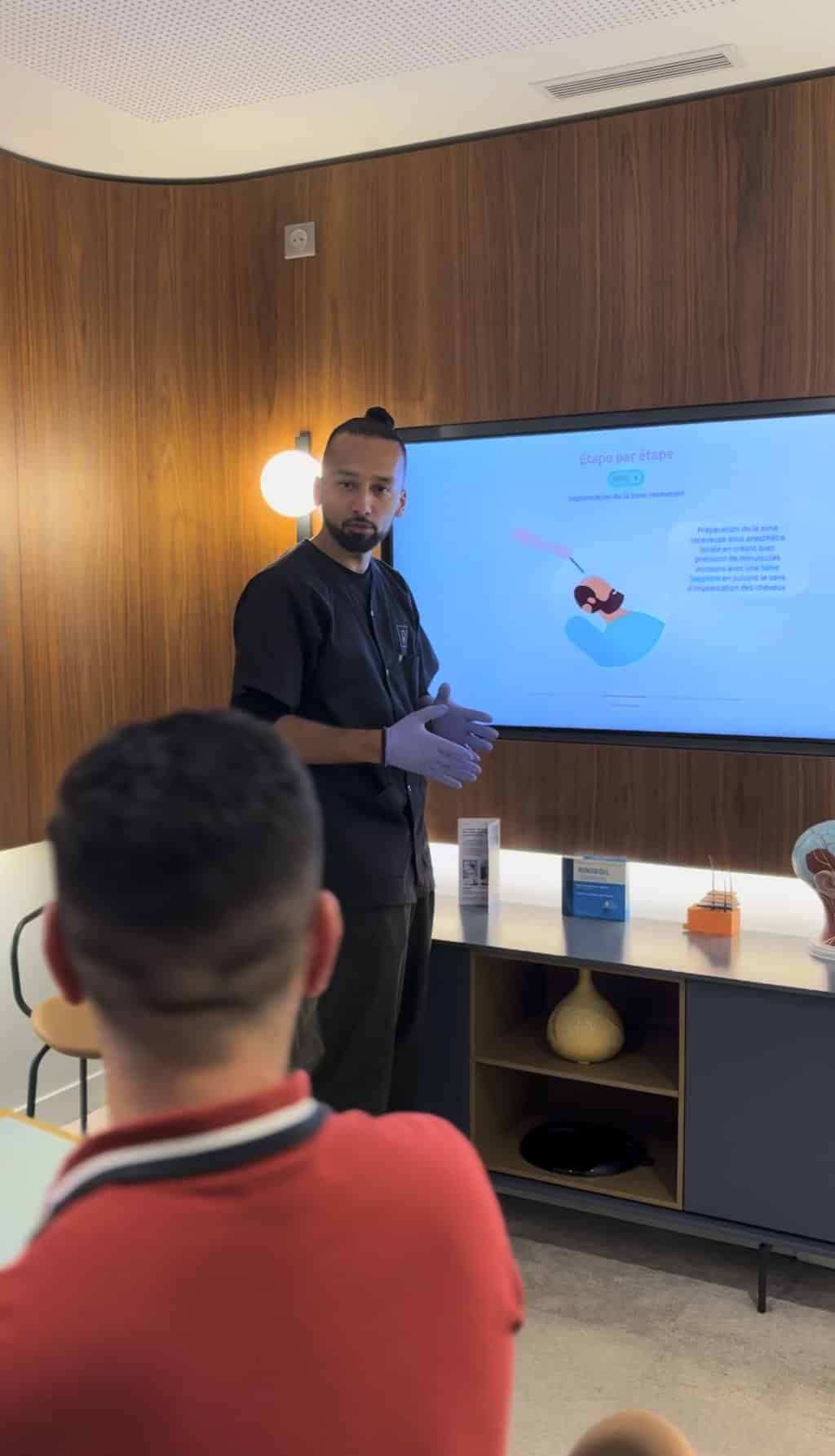
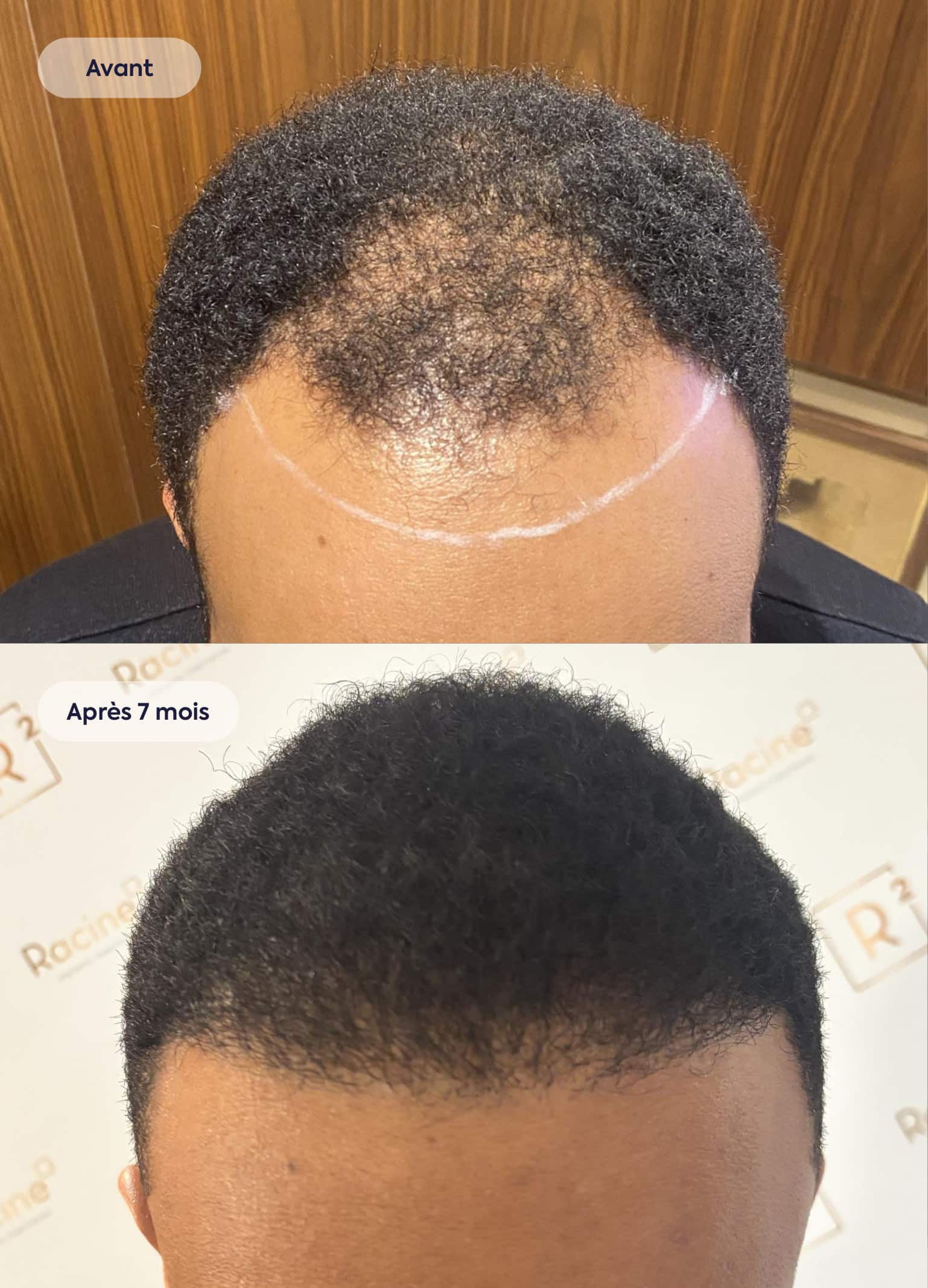
If summer is the ideal time for your hair transplant, it would be a shame for budget concerns to hold you back from achieving your goals or prevent you from fully enjoying your well-deserved vacation.
In addition to offering affordable prices, Racine² has partnered with Alma to offer payment plans in 3, 4, or 10 installments. Take action without waiting, while keeping your vacation budget balanced.
✓ Pay for your hair transplant in 3, 4, or 10 installments
✓ Personalized assessment during your hair consultation
✓ No hidden fees, complete transparency
National expertise, local support
Already a client?
See you in your patient area
Your appointments, documents, instructions, and tutorial videos, all in one place.
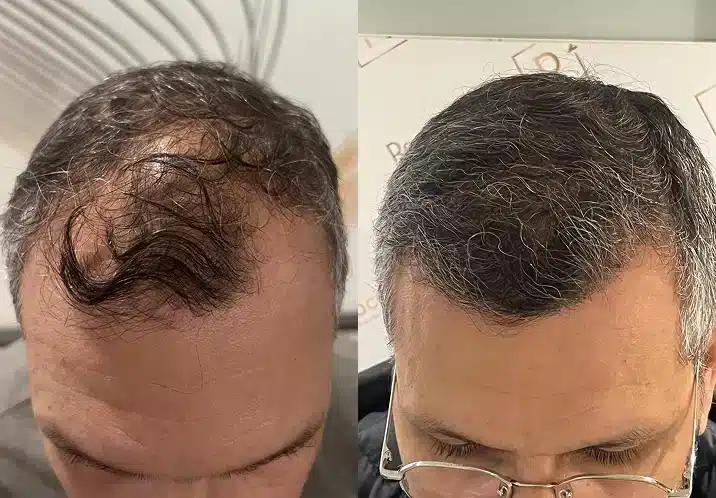



Of course! However, certain precautions are essential to ensure proper healing.
It is entirely possible to have a hair transplant in summer. The FUE technique allows for a quick recovery, but it is important to follow certain precautions after the procedure.
UV rays can slow down the healing process and affect the results, which is why direct sun exposure is not recommended immediately after the procedure.
During the first 2 weeks, avoid any direct and prolonged sun exposure.
For the following 6 weeks, SPF 50 UV protection and a lightweight hat are recommended when exposed to the sun.
A gradual return to exercise is recommended to avoid compromising the results of the procedure.
After a hair transplant, it is recommended to avoid moderate physical activity for 1 month. An increased heart rate, excessive sweating from exercise, and friction can interfere with the healing process.
Contact and high-intensity sports can be resumed 2 months after your hair transplant. As for scuba diving, it should be avoided for 6 months.
For those accustomed to an active lifestyle, it is advisable to start with light exercise, such as walking, before gradually returning to more intense activities.
Be careful with seawater and bacteria, which can slow down the healing process.
After a hair transplant, it is strongly recommended to avoid contact with seawater for at least one month. Salt and microorganisms present in the water can irritate the scalp and increase the risk of infection.
In addition, UV exposure combined with swimming can interfere with the healing process. To avoid any complications, it is best to wait for your doctor’s approval before going swimming again and to follow the recommended hair treatments to promote regrowth.
Questions / Estimates